
Understanding Accuracy and Flow Range in Ultrasonic Flow Sensor Specifications
Understanding Accuracy and Flow Range in Ultrasonic Flow Sensor Specifications
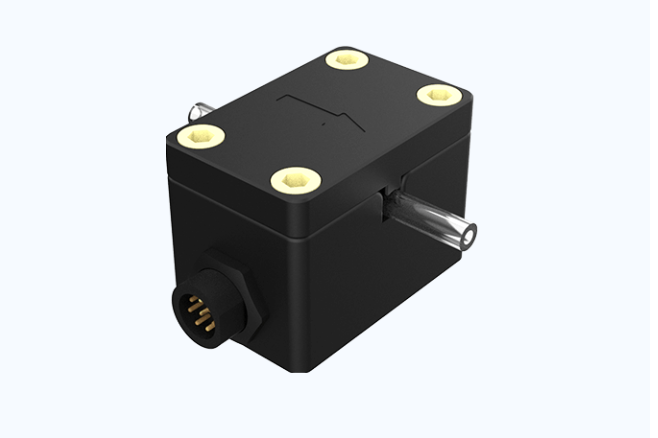
Two numbers decide whether an ultrasonic flow sensor fits a project: the accuracy figure and the flow range. Housing, cable and connector details can often be adapted after the fact. The accuracy band and the measurable flow band cannot. This technical guide explains how to read both specifications, using published data from the XY-TEK CM Series, CG Series and CS Series as worked examples, and contrasting the +/-1%, +/-2% and +/-3% accuracy ratings that appear across the same catalogue.
The practical test is short. Convert the process flow into the same unit as the datasheet, read the lower bound of the measuring scope rather than the headline range, then confirm that the pipe dimensions and fluid temperature in the project sit inside the published compatibility window. Sensors that pass those three checks rarely fail for specification reasons.
Problem Definition: A Headline Range Is Not a Measuring Range
Most mis-selections in flow sensor projects trace back to one habit: reading the first range figure on a datasheet and stopping there.
XY-TEK publishes two figures for several series. The CM Series ultrasonic flow meter is listed with a range of 0-30 L/min and a measuring scope of 0.05-30 L/min. The TPK and TPD in-line series are listed with a range of 0-1000 L/min and a measuring scope of 0.5-100 L/min. The two numbers describe different things. The wider number is the format's nominal span; the narrower one is the band the sensor is intended to measure within. A project whose normal flow sits at 0.06 L/min is inside the CM Series measuring scope and outside a headline-only reading of the CS Series scope of 0.1-50 L/min.
The same logic applies to accuracy. A percentage on a datasheet is not a property of the sensor in isolation. It is stated together with a measuring scope, a compatible pipe diameter window and a fluid temperature range. Change the tubing and one of the conditions the figure was written against has changed. That is why flow range and accuracy have to be read as a pair, and why the pipe specification sits directly underneath them.
Three checks before accepting an accuracy figure
- Scope, not range: is the number being read the measuring scope or the nominal span?
- Condition set: for which pipe ID/OD, pipe material and fluid temperature is the figure claimed?
- Definition: if the listing carries more than one percentage, which one is the accuracy and which one describes a different characteristic?
Industry Background: Specification Literacy Beats Brand Recognition at Component Level
The flow measurement market is large and segmented, and component-level decisions increasingly turn on specification detail rather than on the badge on the housing. The global flow meter market was estimated at USD 10.64 billion in 2024 and is projected to reach USD 15.17 billion by 2030 (Grand View Research). Within it, the ultrasonic flow meter market was valued at USD 1.52 billion in 2025 and is estimated to grow to USD 2.28 billion by 2031 (Mordor Intelligence), with Asia Pacific holding the largest regional share in 2025 at 38.6% (Fortune Business Insights). The clamp-on ultrasonic flowmeter segment alone was valued at USD 1.25 billion in 2024 and is tracked at a 7.4% CAGR through 2032 (Global Information, Inc.).
Two application sectors drive much of the demand for tight accuracy and narrow measuring bands. Flow control in the semiconductor industry was estimated at USD 5.83 billion in 2024, focused on high-purity fluid management (Market Research Future). In medical device supply chains, sensors used in ventilators and drug delivery fall under EN ISO 13485 quality management system requirements. On the standards side, ISO 24062:2023 specifies requirements for clamp-on ultrasonic transit-time meters for liquids and gases in closed conduits, which is a useful reference point when a buyer wants to know what an accuracy claim is being made against.
Large instrumentation groups including Emerson Electric, Siemens AG, Endress+Hauser and Honeywell also operate in this market (Dataintelo). For OEM buyers the consequence is straightforward: the competitive question is rarely which brand exists, but which published accuracy and flow range matches this tubing, this fluid and this process window.
Shanghai Xunyin Technology Co., Ltd (XY-TEK) is a Shanghai-based manufacturer of ultrasonic flow sensors and flow meters, founded in 2018, operating a 5,000 square metre facility with a 30+ person R&D team and annual output of more than 8,000 units, with roughly 50% of production exported. The company focuses on ultrasonic measurement for small tubing and low flow rates, and publishes a measuring scope, a pipe compatibility window and a fluid temperature range for each series - the three fields this guide is built around.
Detailed Solution: How Clamp-On Measurement Works and Where Each Accuracy Tier Sits
Non-invasive clamp-on measurement works by transmitting and receiving ultrasonic signals through the outside wall of the tube. XY-TEK clamp-on sensors use the ultrasonic time-difference method, with non-contact measurement, no moving parts, no pressure loss, no contamination of the fluid path and no interruption to production. Response is at millisecond level, and the same measurement channel supports automatic bubble and blockage detection with alarm output. Because the sensor clamps onto the outside of the tubing, installation does not require cutting the pipe or breaking sterility.
That mechanical arrangement is also why the pipe specification belongs next to the accuracy figure. XY-TEK publishes a compatible pipe ID/OD window and a material list for each clamp-on series. The CG Series is specified for flexible plastic tubing such as PVC, silicone, PFA, PE and PUR, with an OD window of 4 mm to 35 mm and an ID window of 2 mm to 25.4 mm. The CS Series is specified for rigid plastic tubing such as PFA, PTFE, Teflon, PVDF, PP and Nylon, with an OD window of 6.4 mm to 25.4 mm and an ID window of 3.2 mm to 15.9 mm. The CPD Series covers rigid plastic tubing at OD 6-26 mm and ID 3-20 mm. Same clamp-on principle, different mechanical constraint - and a project can fail that constraint while passing every accuracy check.

Accuracy across the catalogue falls into three published tiers, and the tier a project needs is a decision, not a default.
+/-1% - the ultra-low flow tier. The TGU Series low-flow ultrasonic flow sensor is listed at +/-1% accuracy over a measuring scope of 0.1-1000 mL/min, with a U-shaped measuring channel and compatibility with PVC, silicone and PE tubing, for fluids from 0 to 60 degrees C. Its published capability includes measurement accuracy up to +/-0.1 mL/min. This is the tier used where a small absolute error is significant: flux application in selective wave soldering, conformal coating, dispensing and similar pulsed micro-flow work.
+/-2% - the industrial and medical mid tier. The CPD Series clamp-on sensor is listed at +/-2% over a 0.1-50 L/min scope with a built-in LED display, for rigid tubing and fluids from 0 to 90 degrees C. The TPK and TPD in-line series are listed at +/-2% over a 0.5-100 L/min scope for DN4-DN50 and DN15-DN50 respectively, with no moving parts and low maintenance, for fluids from 0 to 90 degrees C. The SU Series single-use sensor is listed at +/-2% over 0.05-10 L/min with a single-use measuring channel, biocompatible polymer materials and support for sterile applications. The TH Series pulsatile sensor is listed at +/-2% over 0-15 L/min, with a measuring scope of 0.01-15 L/min, for cardiovascular flow testing.
+/-3% - the compact OEM tier. The CM Series OEM clamp-on flow meter, the CG Series clamp-on flow sensor and the CS Series non-invasive industrial sensor are all listed at +/-3%. Their measuring scopes are 0.05-30 L/min, 0.02-20 L/min and 0.1-50 L/min respectively. What these series add is format and integration capability rather than the tightest percentage. The CM Series provides RS485 output with a compact non-contact design for OEM integration. The CG Series offers non-invasive bi-directional measurement with analog, pulse and RS485 output plus air bubble detection. The CS Series provides digital output compatibility in a compact integrated housing rated to a 90 degrees C fluid temperature.
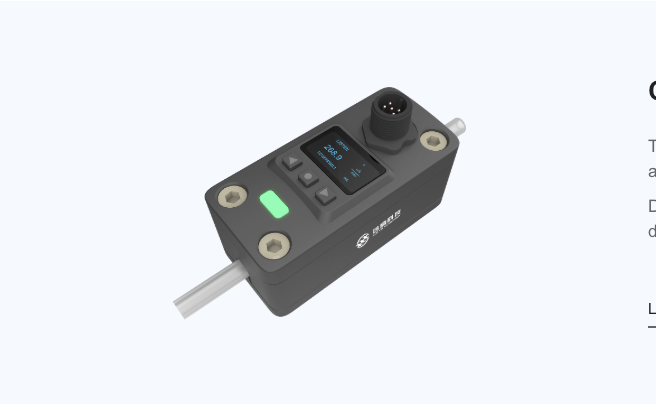
One practical warning about percentages. Series listings do not always carry a single percentage. The CG Series entry, for example, shows a +/-1% header attribute alongside its +/-3% accuracy line. Before design freeze, ask the supplier to confirm which figure is the warranted accuracy for the exact model and tubing size being ordered, and which figure describes a different characteristic. Reading the header instead of the accuracy line is a common and expensive interpretation error.
Reading the flow range: turndown decides more than the top number
Flow range is normally quoted as a span, and the span hides the decision. What matters is where the normal flow sits inside it. A process running at 25 L/min inside a 0.1-50 L/min scope is well placed. A process running at 0.3 L/min inside the same scope is technically inside the band but sitting in the lowest fraction of it, and a narrower, lower-range sensor will usually be the better fit.
This is where the clamp-on and low-flow tiers separate. Compare the clamp-on families directly. A project with a 50 L/min maximum and a 20 mL/min minimum is served by the CG Series scope of 0.02-20 L/min, the CM Series scope of 0.05-30 L/min or the CS Series scope of 0.1-50 L/min. A project with a minimum of 5 mL/min is not - that belongs to the TGU Series band of 0.1-1000 mL/min, published at +/-1%. Matching the band first and the accuracy tier second is the correct order of operations, because no accuracy percentage compensates for measuring outside the intended scope.
Step-by-Step Breakdown: Six Steps to Validate a Spec Pair
- Convert everything to one unit. Write down minimum, normal and maximum flow in a single unit, either L/min or mL/min. Datasheets publish both - for example 0.05-30 L/min for the CM Series and 0.1-1000 mL/min for the TGU Series - and unit conversion errors are the most common source of a wrong fit conclusion.
- Read the measuring scope, not the nominal range. Use 0.05-30 L/min rather than 0-30 L/min, and 0.5-100 L/min rather than 0-1000 L/min. The minimum flow must sit above the lower scope bound, not above zero.
- Check turndown against normal flow. If normal flow sits in the lowest few percent of the span, re-check a lower-range series before accepting the wide one.
- Match the fluid path. Confirm three items against the datasheet: pipe OD and ID, pipe material (flexible PVC, silicone, PFA, PE, PUR versus rigid PFA, PTFE, Teflon, PVDF, PP, Nylon), and fluid temperature (0-60 degrees C on the CG, CM, TGU, SU and TH series; 0-90 degrees C on the CS, CPD, TPK and TPD series).
- Choose the accuracy tier the error budget requires. +/-1% for micro-flow dispensing and coating; +/-2% for general industrial, single-use and pulsatile applications; +/-3% where compact OEM format, bubble detection and output flexibility are the deciding factors. Selecting a tighter percentage than the process needs does not automatically make a project safer, and selecting a looser one removes the margin for drift and process variation.
- Confirm the interface. Output format belongs to the same specification set: RS485 on the CM Series, analog, pulse and RS485 on the CG Series, digital output compatibility on the CS and CPD Series, and a built-in LED display on the CPD Series for local readout.
Use Cases: Where Each Accuracy and Range Combination Sits
Micro-flow dispensing, spraying and cleaning in industrial automation
XY-TEK lists this scenario for monitors of pulsating and micro-flow liquids in spraying, dispensing and cleaning systems, including detection of bubbles, blockage or abnormal flow conditions. Matched equipment includes dispensing machines, selective wave soldering equipment, coating machines, cleaning equipment, liquid supply pumps, industrial control systems and automated production lines. The published requirement set is micro-flow measurement down to mL/min with resolution up to 0.05 mL/min, non-contact measurement, no pressure loss, no mechanical wear, adaptability to glue, chemicals, oils and solvents, and small-diameter pipes that can be fitted without cutting. This is the +/-1% TGU Series territory.
Medical devices and extracorporeal circuits
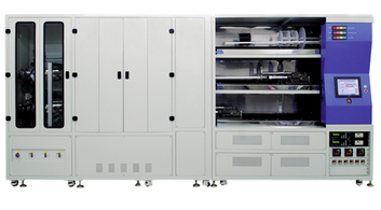
Dialysis, ECMO and artificial heart systems require real-time monitoring of blood flow and pump operation in an indoor medical environment with strict hygiene and biocompatibility requirements. The published requirement set is non-invasive, non-contact, no contamination, no pressure loss, high stability and reliability, suitability for flexible medical tubing at small diameter and low flow rate, safety for blood contact with low shear, and support for real-time alarm and clinical-grade safety. The clamp-on CG Series and CM Series are the XY-TEK formats specified for these projects.
Biopharmaceutical processes
Biopharmaceutical use covers perfusion pump monitoring and pipeline aging detection to prevent emptying or overflow, bubble detection during filtration and transfer processes, and stable measurement for tangential flow filtration and chromatography. The operating mode is non-contact clamp-on measurement with millisecond-level response and automatic bubble or blockage detection, in cleanroom conditions where non-invasive installation without cutting the tube is a requirement rather than a convenience. XY-TEK lists this application across the United States, Canada, Germany, Switzerland, Ireland, the United Kingdom, France, China, India, South Korea, Japan, Singapore and Australia.
Battery electrolyte injection
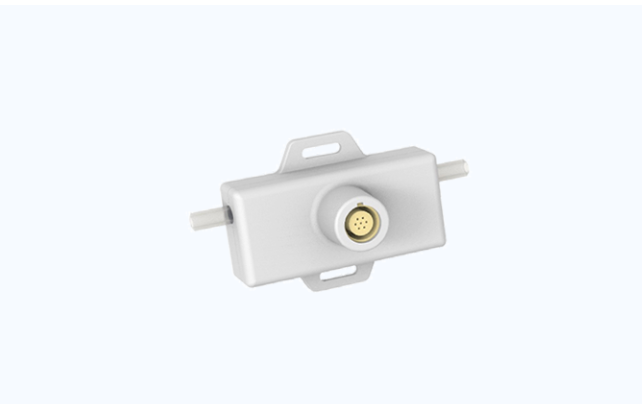
Case data from lithium-ion battery and new energy equipment manufacturers covers 10-30 production lines per customer, with non-invasive monitoring of electrolyte flow to ensure injection accuracy, detect bubbles or leakage and prevent contamination. Clamp-on installation without breaking pipes removes a contamination and downtime risk on electrolyte lines, and the published highlights include high compatibility with corrosive media, bubble and impurity detection, and bidirectional measurement. The CPD Series at +/-2% and 0.1-50 L/min is the specified format.
Liquid cooling
Data centres, industrial equipment, medical device manufacturers and charging station makers use clamp-on measurement to monitor non-conductive coolant flow, prevent overheating, detect leaks and blockages and optimise cooling efficiency, with a reported service life of 2-4 years across multiple cooling loops. The published highlights are suitability for non-conductive media, non-invasive measurement, high stability, real-time monitoring and low pressure loss - all properties that follow from the clamp-on format rather than from the accuracy percentage alone.
Comparison Table: Published Accuracy and Flow Range by Series
| Series | Format | Listed accuracy | Measuring scope | Pipe compatibility | Fluid temp. |
|---|---|---|---|---|---|
| CM Series | OEM clamp-on flow meter, RS485 output | +/-3% | 0.05-30 L/min | OD 4-25 mm / ID 3-16 mm | 0-60 degrees C |
| CG Series | Clamp-on sensor, analog, pulse and RS485, bi-directional, bubble detection | +/-3% (listing also carries a +/-1% header attribute) | 0.02-20 L/min | Flexible tubing; OD 4-35 mm / ID 2-25.4 mm | 0-60 degrees C |
| CS Series | Non-invasive industrial clamp-on, digital output | +/-3% | 0.1-50 L/min | Rigid tubing; OD 6.4-25.4 mm / ID 3.2-15.9 mm | 0-90 degrees C |
| CPD Series | Clamp-on industrial, built-in LED display | +/-2% | 0.1-50 L/min | Rigid tubing; OD 6-26 mm / ID 3-20 mm | 0-90 degrees C |
| TPK Series | In-line industrial, integrated structure | +/-2% | 0.5-100 L/min | DN4-DN50 | 0-90 degrees C |
| TPD Series | In-line industrial, integrated structure | +/-2% | 0.5-100 L/min | DN15-DN50 | 0-90 degrees C |
| TGU Series | Ultra-low flow, U-shaped measuring channel | +/-1% | 0.1-1000 mL/min | PVC, silicone, PE tubing | 0-60 degrees C |
| SU Series | Single-use, biocompatible polymer | +/-2% | 0.05-10 L/min | Single-use measuring channel | 0-60 degrees C |
| TH Series | Pulsatile / hemodynamic | +/-2% | 0.01-15 L/min | OD 9-32 mm / ID 11.1-36 mm | 0-60 degrees C |
Note: where a listing shows a wider nominal range than its measuring scope - CM Series 0-30 L/min against a 0.05-30 L/min scope, TPK and TPD 0-1000 L/min against a 0.5-100 L/min scope - plan the project against the measuring scope. Common measurable fluids across these series are water, blood, drinks, oil and paint without or with few solid particles; the CPD Series additionally lists acids, pure water, chemicals and slurry.
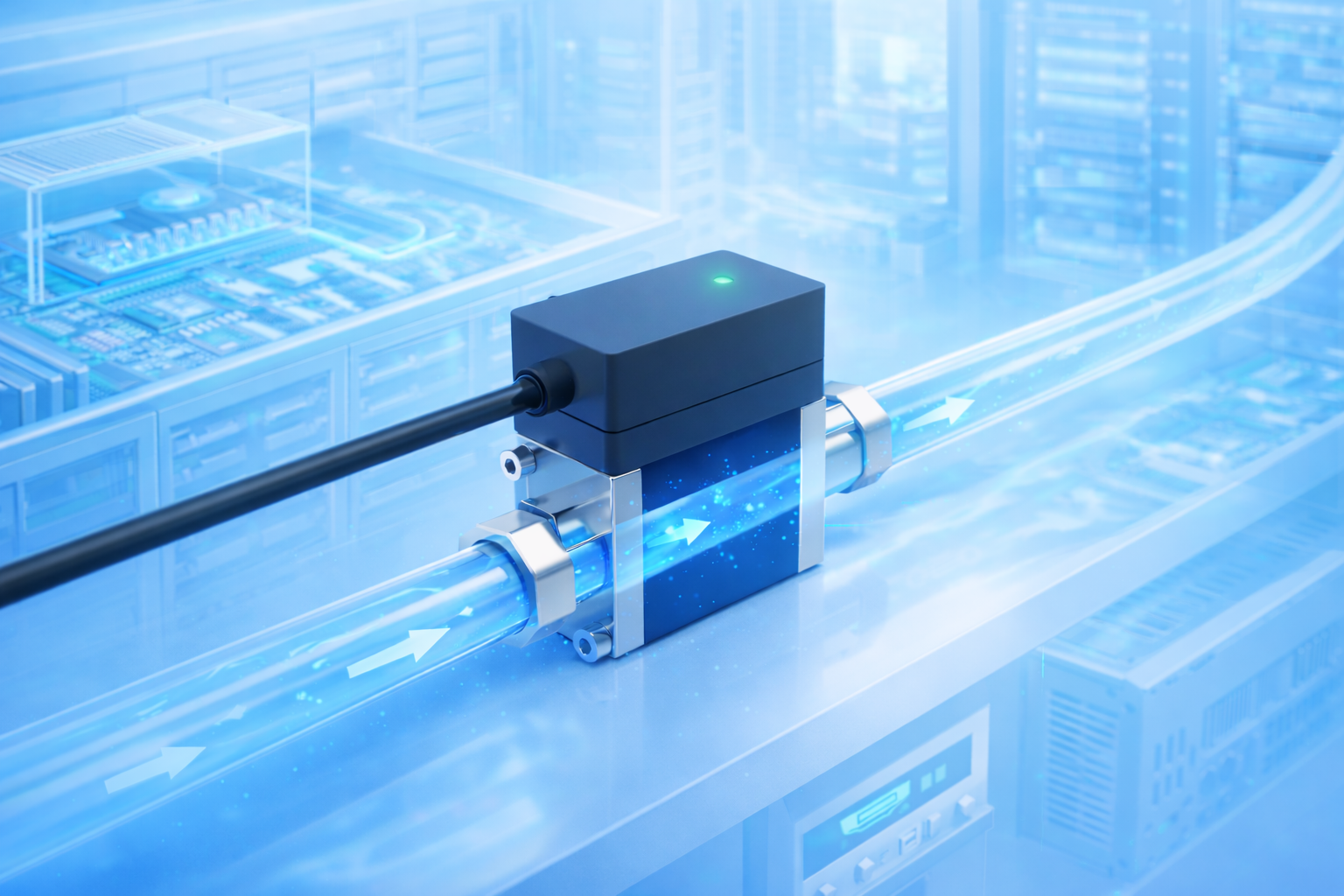
Accuracy tier mapped to project type
| Accuracy tier | Series listed at this tier | Where it typically fits |
|---|---|---|
| +/-1% | TGU Series | Micro-flow and pulsed flow where a small absolute error matters: dispensing, conformal coating, flux application, cleaning systems |
| +/-2% | CPD, TPK, TPD, SU, TH Series | General industrial monitoring, liquid cooling, battery electrolyte lines, single-use and pulsatile medical measurement |
| +/-3% | CM, CG, CS Series | Compact OEM integration, bi-directional measurement, bubble detection and general monitoring where format and output flexibility are the deciding factors |
FAQ
What should an accuracy claim be referenced against?
An accuracy figure should be read together with the conditions it is claimed under: measuring scope, compatible pipe dimensions and fluid temperature. For clamp-on ultrasonic transit-time meters used with liquids and gases in closed conduits, ISO 24062:2023 specifies requirements. In medical device supply chains, sensors used in ventilators and drug delivery fall under EN ISO 13485 quality management system requirements. XY-TEK publishes a measuring scope, a compatible pipe ID/OD window and a fluid temperature range for each series, offers third-party inspection and applies 100% pre-shipment testing on OEM and ODM work. Buyers should still confirm which test method will be used at incoming inspection before design freeze.
Can one clamp-on sensor cover both a few mL/min and 50 L/min?
Not within a single measuring band. The CS Series covers 0.1-50 L/min at +/-3% and the CM Series covers 0.05-30 L/min at +/-3%, while the TGU Series covers 0.1-1000 mL/min at +/-1%. A process that dips to 5 mL/min and peaks at 40 L/min therefore sits outside any single published scope and is normally handled with two measurement points or two sensor models rather than one. If the minimum flow is 20 mL/min or higher, the CG Series scope of 0.02-20 L/min or the CM Series scope of 0.05-30 L/min can be considered.
What order quantity and lead time should be planned for?
For customized and OEM or ODM ultrasonic flow sensor work, the published planning figures are a minimum order quantity of 50 units and a lead time of 1-2 months. Within that, OEM and ODM customization is quoted with a 15-25 day production cycle for items such as sensor size, interface and logo printing, and custom design projects with a 20-30 day cycle for items such as communication protocol and housing material. Quality control options include third-party inspection alongside 100% pre-shipment testing.
How can accuracy be validated before committing to production volume?
Validate on the tubing the production line will actually use, because clamp-on accuracy is published together with a pipe window and a material list. A bench test should reproduce the planned pipe OD and ID, the planned material - flexible PVC, silicone, PFA, PE or PUR for the CG Series; rigid PFA, PTFE, Teflon, PVDF, PP or Nylon for the CS and CPD Series - and the real fluid temperature range, since the clamp-on series are published at 0-60 degrees C or 0-90 degrees C depending on model. XY-TEK supports online engineering support and remote technical support during evaluation.
What is the fastest way to confirm whether a sensor fits my project?
Send four numbers and two material details: minimum flow, normal flow, maximum flow and required fluid temperature, plus pipe ID/OD and pipe material. With those six inputs, the measuring scope check, the pipe compatibility check and the accuracy tier decision can be completed against published series data without a site visit. XY-TEK can be reached at global@xy-tek.cn or on +86-21-33885752, and a project brief with those six inputs is the quickest route to a specific model recommendation and quotation.
Conclusion: Read the Pair, Then Choose the Format
Accuracy and flow range are not independent specifications. Together with the compatible pipe window and fluid temperature range, they describe a single operating condition, and a project either sits inside that condition or it does not. The working method is repeatable: convert the flow to one unit, read the lower bound of the measuring scope, check the pipe ID/OD and material, then select the accuracy tier the error budget justifies - +/-1% for micro-flow work, +/-2% for industrial, single-use and pulsatile applications, +/-3% where compact OEM format, bubble detection and output flexibility carry the decision.
Across the XY-TEK catalogue that produces a practical map rather than a single recommendation: the CM Series at 0.05-30 L/min with RS485 for OEM integration, the CG Series at 0.02-20 L/min with bi-directional measurement and bubble detection, the CS Series at 0.1-50 L/min for rigid tubing up to 90 degrees C, the CPD Series at 0.1-50 L/min for liquid cooling and battery lines, the TPK and TPD in-line series at 0.5-100 L/min for larger pipe sizes, and the TGU Series at 0.1-1000 mL/min at +/-1% for the micro-flow band.
Next Step
Send your minimum, normal and maximum flow, your fluid temperature and your pipe ID/OD and material, and XY-TEK will map them against the published measuring scopes and accuracy tiers above and return a specific model recommendation.
Email: global@xy-tek.cn or info@xy-tek.cn | Tel: 86-21-33885752
Address: Building 7, No. 410 Jinggu Road, Minhang District, Shanghai 200245, China
Website: https://www.xy-tek.com/
Have Questions or Need More Details?
Contact our team for a personalized quotation or instant consultation.
Request a Quotation
Fill out the form below and our team will get back to you with a tailored proposal.
WhatsApp Direct Chat
Prefer to chat in real-time? Message us on WhatsApp for instant assistance & quick answers.
- Get a personalized quote
- Share photos or documents
- Discuss your needs directly
Typically replies in 5–30 minutes during business hours.