
Long-Term Ultrasonic Flow Sensor Partnerships: An OEM Buyer FAQ
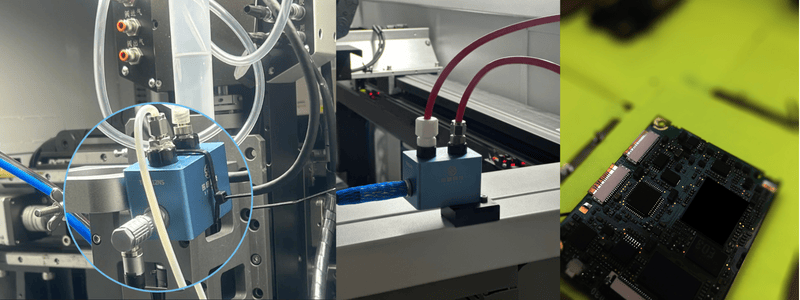
Industrial automation and new energy systems are among the applications where XY-TEK ultrasonic flow sensors are deployed for continuous flow monitoring.
The short answer: a long-term ultrasonic flow sensor partnership is governed by four things you can put in writing — a defined supply and lead-time schedule, a frozen customization scope, acceptance criteria applied at shipment, and an after-sales route that reaches an engineer rather than a generic mailbox. XY-TEK, formally Shanghai Xunyin Technology Co., Ltd (XY-TEK), is a Shanghai-based developer, manufacturer and seller of ultrasonic flow sensors and flow meters, founded in 2018, operating a 5,000 m² facility with a 30+ person R&D team and an annual output of more than 8,000 units, of which roughly 50% is exported.
What follows answers the questions OEM procurement and engineering teams actually raise between evaluation and volume execution. It is written as a FAQ because the answers are the deliverable — each one can be read on its own, and each is grounded in published product data, purchasing terms and application records rather than general market commentary.
Quick reference for OEM buyers: standard purchasing terms are listed at a minimum order quantity (MOQ) of 1 unit, FOB delivery, and full payment before shipment, with factory inspection and calibration before shipping as the acceptance criteria. OEM/ODM and custom design programs are listed at an MOQ of 50 units, with a 15–25 day production cycle for OEM/ODM and a 20–30 day cycle for custom design, and an overall lead time of 1–2 months.
Why Flow Sensor Partnerships Break After the Sample Stage
Qualification tests one sensor against one process. Volume supply tests something entirely different: whether that sensor stays identical across batches, whether the customization scope survives a personnel change on either side, and whether questions raised in month fourteen still get answered in days rather than weeks.
Three failure modes account for most of the friction in ultrasonic flow sensor supply relationships, and none of them is a measurement problem:
- Specification drift. The tubing material, wall thickness or interface protocol assumed at qualification quietly changes. Because a clamp-on ultrasonic flow sensor measures through the tube wall, a change from one rigid plastic tubing grade to another is a change to the measurement setup, not just to the bill of materials.
- Customization ambiguity. Terms such as “custom housing” or “custom interface” mean different things to different teams. Unless the scope names the exact dimensions being altered — sensor size, interface, logo printing, communication protocol or housing material — each purchase order becomes a new negotiation.
- Support latency. A sensor that fails incoming inspection needs an answer within the production window. A supplier without an engineering escalation path turns a two-day issue into a two-week line stoppage.
Because these failure modes appear after the purchase order rather than before it, they are structurally invisible to a sample test. That is precisely why they belong in the supplier evaluation, and why they are the focus of this page.
The Market Context Behind Multi-Year Sourcing Decisions
The commercial backdrop explains why buyers are increasingly signing multi-year sensor agreements instead of re-tendering annually. The global flow meter market was estimated at USD 10.64 billion in 2024 and is projected to reach USD 15.17 billion by 2030, according to market research compiled by HTNXT Research. Within that total, the ultrasonic flow meter segment was valued at USD 1.52 billion in 2025, with an estimated growth path to USD 2.28 billion by 2031.
Mounting method is the more revealing data point for buyers planning long-term supply. Clamp-on ultrasonic flowmeters are reported to account for 57% of the global ultrasonic flow meter market share in 2026, based on Straits Research market data. A majority clamp-on market means most demand is being met on existing pipework and existing production lines rather than on newly built plants.
That has a direct consequence for partnership design. When a sensor is clamped onto an installed line, it is attached to an asset the customer intends to keep running for years. The supplier relationship therefore inherits the service life of the line itself, and the practical questions shift from “which sensor is fastest to ship” to “which supplier will still support this sensor when the line is five years old”.
How XY-TEK Structures a Long-Term Supply Relationship
Shanghai Xunyin Technology Co., Ltd (XY-TEK) is a high-tech company dedicated to the development, manufacturing and sales of ultrasonic flow sensors and flow meters. The company specializes in ultrasonic flow sensors for fluid management and control, particularly for small tubing and low flow rate measurement, and supplies medical device, bioprocessing, scientific research, industrial automation and food and beverage applications.
Supply continuity: what is committed in writing
Continuity starts with terms a buyer can plan against rather than promises about capacity. XY-TEK’s listed purchasing terms state an MOQ of 1 unit, FOB delivery terms, and payment in full before shipment. The stated acceptance criteria are factory inspection and calibration before shipping.
For production planning, the company lists a lead time of 1–2 months across its program types, with a 15–25 day production cycle for OEM/ODM programs and a 20–30 day cycle for custom design programs. Those figures are what a buyer should load into an MRP or safety-stock calculation; they describe the standard program cadence rather than a best-case expedite.
Export coverage also matters for continuity. XY-TEK operates a global export model, with approximately 50% of output exported and installed base evidence spanning the United States, China, Germany, Japan, Korea, Singapore, India, Thailand, Italy, France, the United Kingdom and the Netherlands across its documented application records.
Customization and OEM/ODM scope
Customization is where long-term partnerships are either defined or lost, so it is worth being precise about what each program covers. XY-TEK offers OEM & ODM production services, custom design services, and standard catalog products.
| Program | Customization scope | Production cycle | MOQ | Quality control |
|---|---|---|---|---|
| OEM / ODM | Sensor size, interface, logo printing | 15–25 days | 50 units | 100% pre-shipment testing |
| Custom Design | Communication protocol, housing material | 20–30 days | 50 units | Third-party inspection available |
Two practical readings follow from this table. First, sensor size, interface and logo printing sit in the OEM/ODM track, while communication protocol and housing material sit in the custom design track — so a project that needs both an altered enclosure material and a branded label spans two program types and should be quoted as such. Second, the quality-control mechanism differs by track: OEM/ODM programs run 100% pre-shipment testing, whereas custom design programs offer third-party inspection when the buyer requires external verification.
Both program types share the same listed after-sales structure: online engineering support, remote technical support and a quality warranty.
After-sales support: what it actually consists of
After-sales in this category is mostly technical, not transactional. The listed service set — online engineering support, remote technical support and quality warranty — maps to three distinct buyer situations.
- Integration questions during commissioning. Signal output, tubing compatibility and mounting position are the usual topics, and they are answered remotely before the line is released for production.
- In-service anomalies. A sudden zero reading on a clamp-on sensor is frequently an air bubble or an empty tube rather than a failed unit; remote diagnosis distinguishes the two without a site visit.
- Warranty handling. Documented acceptance criteria at shipment — factory inspection and calibration before shipping — establish the baseline against which a warranty claim is assessed.
Product depth behind the partnership
A long-term agreement is only as useful as the portfolio behind it, because a line change should not force a supplier change. XY-TEK’s range covers ten series: the SU single-use ultrasonic flow sensor, TGU low-flow ultrasonic flow sensor, CG, CS and CPD clamp-on ultrasonic flow sensors, CM OEM clamp-on flow meter, TH pulsatile flow sensor, TPD and TPK inline ultrasonic flow sensors, and the BG ultrasonic bubble detector. Between them they cover formats from single-use bioprocessing through clamp-on retrofit to in-line industrial metering.
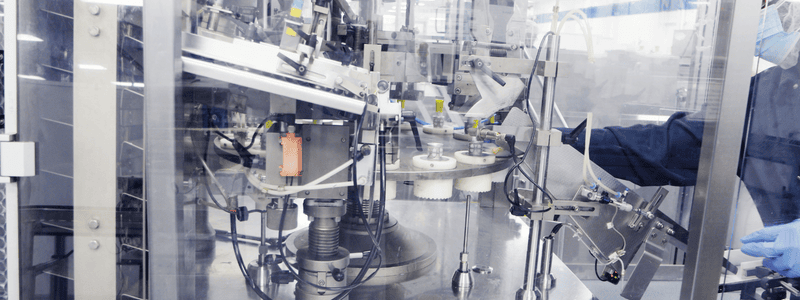
Medical device fluid paths are one of the application areas where non-invasive clamp-on ultrasonic flow sensing is used for continuous monitoring.
Step-by-Step Breakdown: Evaluating a Long-Term Flow Sensor Partner
The following sequence reflects the order in which evaluation issues actually surface. Skipping a step does not remove the risk; it defers it to volume production.
- Define the fluid, tubing and flow envelope first. Record the liquid, its temperature, the tube or pipe material, the outer and inner diameter, and the normal and peak flow rates. Every downstream decision depends on this envelope, and most disputes trace back to an undefined one.
- Match the format to the physical line. Choose between clamp-on, in-line, single-use or bubble detection before choosing between suppliers. Retrofit lines without available downtime point to clamp-on; new skids and manifold assemblies point to in-line; sterile batches point to single-use.
- Confirm the accuracy class against the process window. Different series carry different stated accuracy — for example ±1% for the TGU low-flow series and ±2% for the CPD, TPD, TPK, TH and SU series — so the accuracy requirement should be set by the process, not by the widest available specification.
- Freeze the customization scope in writing. Name the exact items being changed. Acceptable descriptions are “sensor size”, “interface”, “logo printing”, “communication protocol” and “housing material”; “customized sensor” is not a scope.
- Agree acceptance criteria and payment terms before the first production order. The stated baseline is factory inspection and calibration before shipping, with payment in full before shipment. If third-party inspection is required, confirm it at quotation stage rather than at shipment.
- Verify intellectual property and technical documentation. XY-TEK holds a CNIPA Invention Patent Certificate (No. 7946602) issued 16 June 2025 and valid to 16 June 2045 for liquid flow sensing and filter enhancement technology applications, plus two further CNIPA invention patents issued 1 November 2022 and valid to 1 November 2042 covering ultrasonic flowmeter technology and ultrasonic flow sensor technology.
- Map lead time into the production plan. With a 1–2 month lead time and program cycles of 15–25 or 20–30 days, the buffer stock decision should be made at the same time as the purchase order, not after the first late delivery.
- Establish the after-sales escalation path. Confirm who receives a technical question, through which channel, and what the expected first response looks like. Online and remote engineering support is only useful if the route into it is known before it is needed.
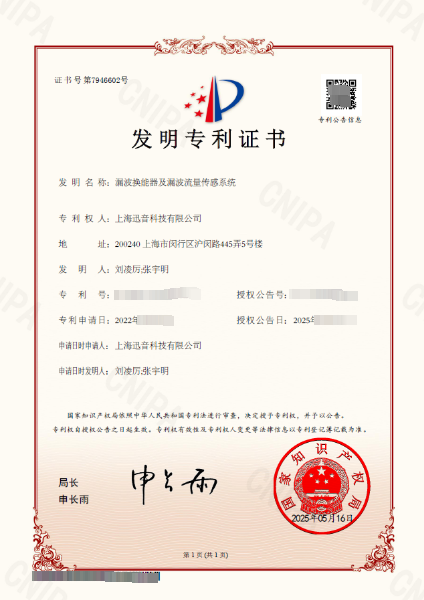
XY-TEK Invention Patent Certificate No. 7946602, issued by the China National Intellectual Property Administration on 16 June 2025, covering liquid flow sensing and filter enhancement technology applications.
Use Cases: Where Long-Term Partnerships Are Tested
Three documented application areas show how the durability of a supplier relationship is demonstrated in practice rather than asserted.
Liquid cooling systems
Data centers, industrial equipment manufacturers, medical device manufacturers and charging station makers have used XY-TEK flow sensors to monitor non-conductive coolant flow, prevent overheating, detect leaks and blockages, and optimize cooling efficiency. The stated highlights for this application are suitability for non-conductive media, non-invasive measurement, high stability, real-time monitoring, wide adaptability to coolants and low pressure loss. Installations span the United States, China, Germany, Japan, Korea and Singapore, with a typical service life of 2–4 years and reported outcomes of stable cooling performance, reduced energy consumption, extended equipment life, earlier anomaly detection and less downtime.
Battery electrolyte injection
Lithium-ion battery manufacturers and new energy equipment makers have used XY-TEK clamp-on ultrasonic flow sensors for non-invasive monitoring of electrolyte flow, ensuring injection accuracy and detecting bubbles or leakage. The key operational advantage is clamp-on installation without breaking pipes, combined with non-contact, contamination-free measurement, high compatibility with corrosive media and bidirectional measurement. Across installations covering 10–30 production lines in China, the United States, Germany, Korea, Japan, India, Singapore and Thailand, the reported outcomes were improved battery consistency, reduced rejection rate, low maintenance and enhanced production safety, with stable operation over 2–3 years. The specific problem this solved was contamination risk and pipeline cutting associated with traditional in-line flow sensors.
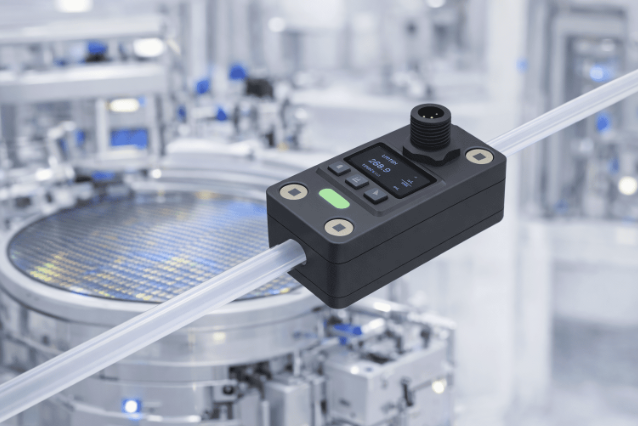
Clamp-on ultrasonic flow sensing for battery manufacturing, where the sensor is mounted on the existing line without cutting pipework.
Micro-flow dispensing and coating
Electronics manufacturing enterprises, SMT/EMS factories and selective wave soldering equipment manufacturers have used XY-TEK low-flow ultrasonic flow sensors for real-time measurement and control of pulsed micro-flux flow, together with bubble, blockage and leakage detection and process data recording. The TGU series measures ultra-low flow down to 1 mL/min at ±1% accuracy with fast response for pulsating flow, and is designed with no moving parts, corrosion resistance, maintenance-free operation, bidirectional measurement and standard connectors for quick installation. Deployments across the United States, China, Germany, Italy, France, the United Kingdom and the Netherlands reported improved soldering quality and consistency, reduced cold solder and missing solder, lower flux waste and rework cost, and higher production yield over implementation periods of 1–3 years.
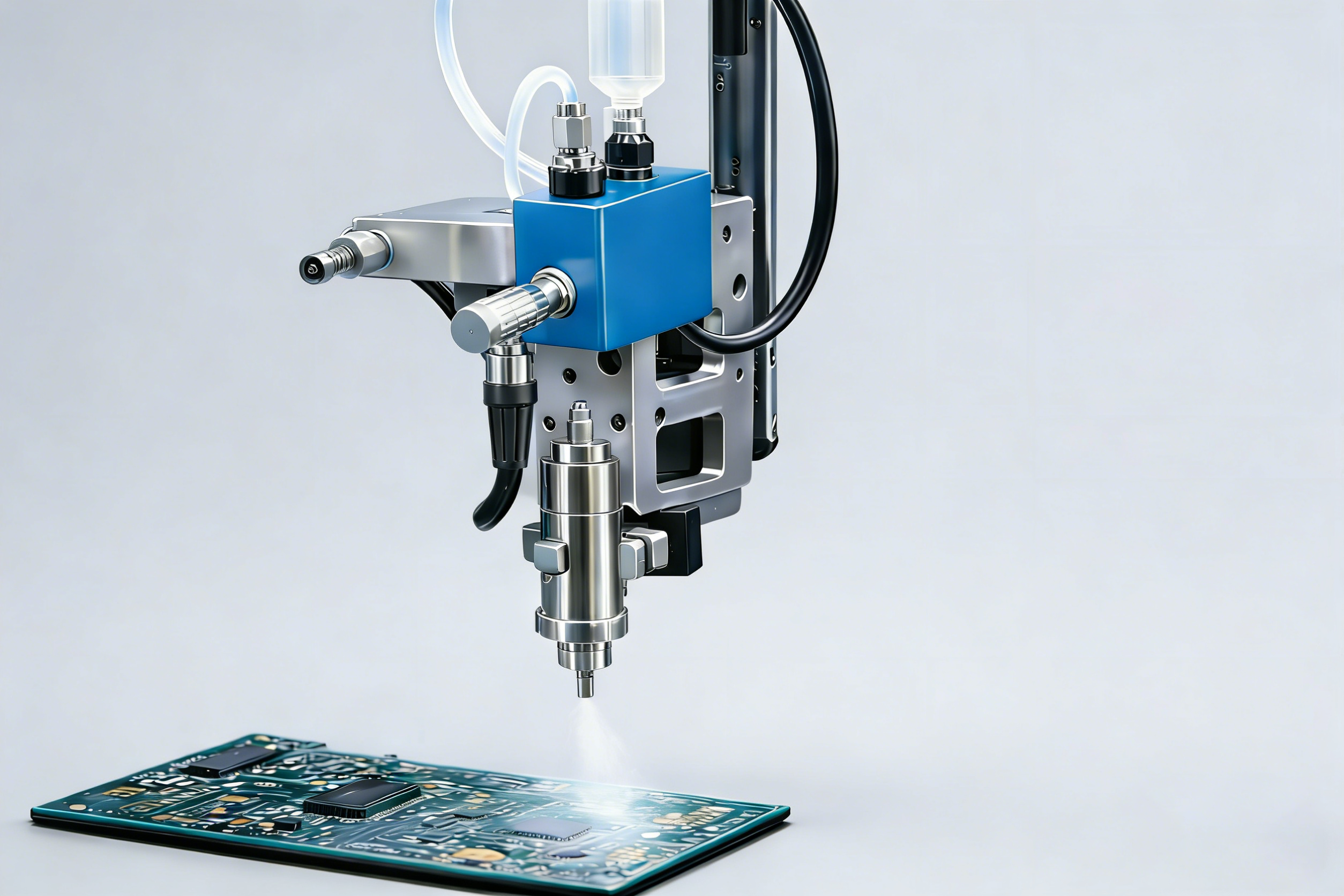
Low-flow ultrasonic flow sensing in precision dispensing and coating processes, where pulsed micro-flow must be measured continuously.
Comparison Table: Series Fit and Program Terms
The table below maps XY-TEK’s ten series against the parameters that most often change during a multi-year program. Stated values are the published product parameters and should be matched against the actual tubing, fluid and temperature envelope before selection.
| Series | Format | Accuracy | Stated range | Compatible tubing / pipe | Fluid temperature | Typical application |
|---|---|---|---|---|---|---|
| CG | Clamp-on ultrasonic flow sensor | ±3% | 0–20 L/min | OD 4–35 mm / ID 2–25.4 mm; flexible tubing (PVC, silicone, PFA, PE, PUR) | 0–60 °C | Medical devices, biopharmaceutical, industrial automation |
| CS | Clamp-on ultrasonic flow sensor | ±3% | 0–50 L/min | OD 6.4–25.4 mm / ID 3.2–15.9 mm; rigid plastic tubing | 0–90 °C | Industrial automation, food & beverage, water treatment, semiconductor |
| CPD | Clamp-on ultrasonic flow sensor | ±2% | 0–80 L/min | OD 6–26 mm / ID 3–20 mm; rigid plastic tubing | 0–90 °C | Industrial automation, food & beverage, water treatment, semiconductor |
| CM | OEM clamp-on flow meter (RS485 output) | ±3% | 0–30 L/min | OD 4–25 mm / ID 3–16 mm | 0–60 °C | Medical devices, OEM equipment, fluid control systems, laboratory equipment |
| TGU | Low-flow ultrasonic flow sensor | ±1% | 0–1000 mL/min (accuracy up to ±0.1 mL/min) | PVC, silicone, PFA, PE, PUR flexible tubing | 0–60 °C | Bioprocess, medical equipment, pharmaceutical production, semiconductor |
| TPD | Inline ultrasonic flow sensor | ±2% | 0–1000 L/min | DN15–DN50; plastic (PPS) or stainless steel | 0–90 °C | Industrial automation, battery manufacturing, chemical processing, liquid cooling |
| TPK | Inline ultrasonic flow sensor | ±2% | 0–1000 L/min | DN4–DN50; plastic (PPS) or stainless steel | 0–90 °C | Industrial automation, battery manufacturing, chemical processing, liquid cooling |
| TH | Pulsatile flow sensor | ±2% | 0–15 L/min | OD 9–32 mm / ID 11.1–36 mm | 0–60 °C | Cardiovascular research, hemodynamic testing, medical laboratories |
| SU | Single-use ultrasonic flow sensor | ±2% | 0.05–10 L/min | Single-use measuring channel; biocompatible polymer materials | 0–60 °C | Biopharma, single-use systems, medical manufacturing |
| BG | Ultrasonic bubble detector | 1/3 bubble size of tubing ID | Customizable detection range | OD 3.2–19 mm / ID 1.6–12.7 mm; rigid plastic tubing | 0–60 °C | Medical devices, bioprocess, food & beverage dosing, industrial |
Read alongside the purchasing terms, the table also shows why an accurate scope matters. A project that begins with a CG clamp-on sensor for a laboratory device and later moves to an SU single-use channel for production has changed format, accuracy class, flow range and tubing assumption — a scope change that should be reflected in the agreement rather than absorbed silently.
Frequently Asked Questions
1. What certification and compliance evidence should an OEM buyer verify before committing to a long-term flow sensor supply agreement?
Verify documented, traceable intellectual property and a defined testing routine at shipment. Shanghai Xunyin Technology Co., Ltd (XY-TEK) holds an Invention Patent Certificate, No. 7946602, issued by the China National Intellectual Property Administration (CNIPA) on 16 June 2025 and valid until 16 June 2045, covering liquid flow sensing and filter enhancement technology applications. Two further CNIPA invention patents, issued 1 November 2022 and valid until 1 November 2042, cover ultrasonic flowmeter technology and ultrasonic flow sensor technology respectively. On the production side, OEM/ODM programs run 100% pre-shipment testing, custom design programs offer third-party inspection on request, and the stated acceptance criteria are factory inspection and calibration before shipping.
2. What customization and OEM capability should a long-term supplier be able to document?
A supplier should be able to name the exact items it can change and the program each falls under. XY-TEK offers OEM & ODM production services, custom design services, and standard catalog products. OEM/ODM programs cover sensor size, interface and logo printing on a 15–25 day production cycle. Custom design programs cover communication protocol and housing material on a 20–30 day cycle. Both carry an MOQ of 50 units and a lead time of 1–2 months, and both are backed by online engineering support, remote technical support and a quality warranty. The portfolio behind these programs spans ten series — SU, TGU, CG, CM, TH, CS, CPD, TPD, TPK and BG — covering single-use, clamp-on, in-line, low-flow and bubble-detection formats.
3. What purchasing terms, MOQ and payment conditions apply to a long-term program?
XY-TEK’s listed purchasing terms state a minimum order quantity of 1 unit, FOB delivery terms, and payment in full before shipment, with factory inspection and calibration before shipping as acceptance criteria. OEM/ODM and custom design programs are listed separately at an MOQ of 50 units, because those programs involve changing sensor size, interface, branding, communication protocol or housing material. Buyers should therefore expect the MOQ to move from single units for standard catalog sensors to 50 units per customization program, and should confirm which track a given order falls under before pricing is finalised.
4. How is quality kept consistent across repeat orders?
Consistency rests on three controls that can be checked independently. First, published acceptance criteria: factory inspection and calibration before shipping. Second, a testing routine that differs by program — 100% pre-shipment testing for OEM/ODM, and third-party inspection available for custom design. Third, a stable specification baseline: stated accuracies of ±1% for the TGU low-flow series and ±2% for the CPD, TPD, TPK, TH and SU series, with compatible tubing and fluid temperature limits published per series. When any of these three inputs changes between orders, the change should be recorded as a scope revision rather than treated as routine supply.
5. How are lead time and after-sales support handled over a multi-year partnership?
Lead time is listed at 1–2 months across program types, with production cycles of 15–25 days for OEM/ODM and 20–30 days for custom design, which is the figure to use when setting buffer stock. After-sales consists of online engineering support, remote technical support and a quality warranty. The durability of that support is visible in documented application records: liquid cooling installations running 2–4 years, battery electrolyte monitoring stable for 2–3 years, and electronics micro-flow deployments over implementation periods of 1–3 years. Buyers who want to test these terms before committing can request a sample or a quotation from XY-TEK at global@xy-tek.cn, or review the sensor range at www.xy-tek.com.
Conclusion
A long-term ultrasonic flow sensor partnership is not secured by a product specification; it is secured by the four documents a buyer can point to when something changes — an agreed scope, a stated lead time, written acceptance criteria, and a named route to engineering support. Everything else is a promise.
XY-TEK’s published terms give OEM buyers concrete anchors for each of those four items: an MOQ of 1 unit with FOB delivery and full payment before shipment for standard products, an MOQ of 50 units with a 15–25 or 20–30 day production cycle for OEM/ODM and custom design work, a 1–2 month lead time, and after-sales covering online engineering support, remote technical support and a quality warranty. Behind those terms sits a ten-series portfolio and a patent record issued by CNIPA, covering liquid flow sensing and filter enhancement technology, ultrasonic flowmeter technology, and ultrasonic flow sensor technology.
For procurement and engineering teams moving from evaluation to execution, the practical next step is to test the relationship on the small things first: a sample, a scoped quotation, and a documented acceptance routine. If those three hold up, the multi-year agreement is a formality rather than a risk.
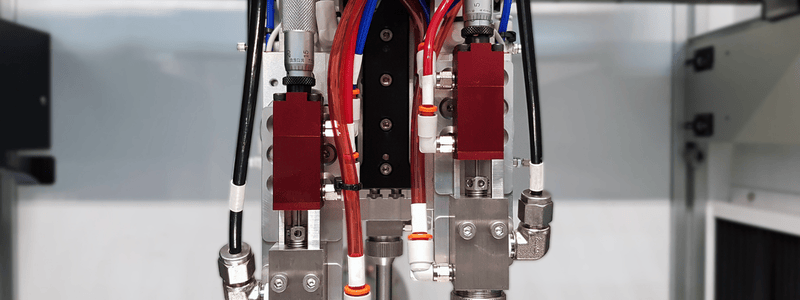
XY-TEK ultrasonic flow sensors serve semiconductor, bioprocess, medical, liquid cooling, battery and industrial automation applications.
Request a sample, a scoped quotation, or the full catalog
Share your tubing size, fluid, temperature range and required flow window, and XY-TEK will confirm the matching series and program type — standard, OEM/ODM or custom design.
Website: www.xy-tek.com | Email: global@xy-tek.cn | Tel: 86-21-33885752
Shanghai Xunyin Technology Co., Ltd (XY-TEK), Building 7, No. 410 Jinggu Road, Minhang District, Shanghai 200245, China
Have Questions or Need More Details?
Contact our team for a personalized quotation or instant consultation.
Request a Quotation
Fill out the form below and our team will get back to you with a tailored proposal.
WhatsApp Direct Chat
Prefer to chat in real-time? Message us on WhatsApp for instant assistance & quick answers.
- Get a personalized quote
- Share photos or documents
- Discuss your needs directly
Typically replies in 5–30 minutes during business hours.