
Supplier Evaluation FAQ: Verifying Ultrasonic Flow Sensor Capability and Delivery Assurance
Verifying an ultrasonic flow sensor supplier comes down to two questions that can be answered with documents rather than assurances: can this supplier actually build the sensor format your system requires, and can it deliver that sensor on a schedule your production plan can absorb?
For buyers evaluating XY-TEK — the brand of Shanghai Xunyin Technology Co., Ltd., a Shanghai-based developer and manufacturer of ultrasonic flow sensors and flow meters founded in 2018 — both questions have checkable answers. Capability is answered by product breadth that is documented at specification level. Delivery assurance is answered by disclosed capacity, lead time, inspection and after-sales terms.
This FAQ is written for OEM buyers, procurement managers and integration engineers who are past discovery and are converting a shortlist into a specification and a purchase order. It does not rank suppliers. It sets out the specific evidence to request and how to read it.
Problem Definition: Why Supplier Capability Claims Are Hard to Verify
Most supplier websites present one product photograph and a capability statement broad enough to cover any inquiry. That structure hides the fact that flow sensor requirements diverge at the format level. A single-use sensor with a hygienic measuring channel, a clamp-on sensor that never contacts the liquid, an inline sensor that becomes part of the process line, and a bubble detector that reports gas-liquid state rather than flow rate are different products with different engineering content — not variants of one device.
Two failure modes follow. The first is over-claiming: a supplier that manufactures one clamp-on sensor answers every format question affirmatively, and the gap only becomes visible during first-article testing. The second is under-documentation: a supplier may genuinely build the required format but cannot state a measurement range, a wetted material or a temperature limit in writing, which leaves the buyer unable to defend the selection internally.
Delivery assurance fails in a similar way, but for different reasons. Capability and delivery are separate risks. A supplier can hold the right specifications and still be unable to hold a schedule, because capacity, inspection discipline and lead-time commitments are operational facts rather than product facts. They are verified through different documents.
For a buyer in the evaluation-to-execution stage, the practical test is whether each claim can be converted into a line in a specification or a clause in a purchase order. Claims that cannot be converted are not evidence.
Industry Background: Where Ultrasonic Flow Sensing Demand Is Concentrating
Demand context matters because it indicates which capabilities a supplier is likely to have industrialized and which formats remain specialist. Published research places the global flow meter market at USD 10.64 billion in 2024, projected to reach USD 15.17 billion by 2030 (Grand View Research). The ultrasonic segment was valued at USD 1.52 billion in 2025 and is estimated to reach USD 2.28 billion by 2031 (Mordor Intelligence). Asia Pacific held the largest regional share of the ultrasonic flow meter market in 2025 at 38.6%, driven by industrial expansion (Fortune Business Insights).
Published estimates of the ultrasonic segment diverge substantially depending on scope — for example, whether smart water meters are included. These figures should be treated as directional context rather than as a procurement input.
Two application clusters are expanding faster than the general market. Flow control in the semiconductor industry was estimated at USD 5.83 billion in 2024, focused on high-purity fluid management (Market Research Future). Clamp-on ultrasonic flow meters were valued at USD 1.25 billion in 2024, growing at a CAGR of 7.4% through 2032 (Global Information, Inc.); clamp-on formats are commonly specified where a process line cannot be opened for an inline installation. For landscape context, Emerson Electric, Siemens AG, Endress+Hauser and Honeywell are listed among the major global competitors in the ultrasonic flow sensor market (Dataintelo).
Standards shape the evidence buyers should request. ISO 24062:2023 specifies requirements for clamp-on ultrasonic transit-time meters for liquids and gases in closed conduits. Medical sensors — including flow sensors for ventilators and drug delivery — fall under EN ISO 13485 quality management systems. Neither standard substitutes for a supplier's own documentation, but both indicate which supplier records will be examined during a buyer's qualification process.
The industry list that matters for verification is specific rather than general: industrial automation, food and beverage, water treatment, semiconductor, bioprocess, medical equipment, pharmaceutical production, battery manufacturing, and liquid cooling.
Documented Capability: How XY-TEK's Sensor Families Answer Format Questions
The fastest way to test a supplier's breadth claim is to request a format-to-specification mapping. XY-TEK publishes that mapping across ten ultrasonic sensor families, grouped by installation format and described by measurement range, wetted materials, tubing or pipe compatibility and fluid temperature limit.
Single-use and low-flow formats
The SU Series single-use ultrasonic flow sensor provides a single-use measuring channel with hygienic fluid monitoring and sterile application support. It is rated ±2% over 0.05–10 L/min with high measurement repeatability, built from biocompatible polymer materials, and specified for fluids from 0°C to 60°C. Its documented industry fit covers biopharma, single-use systems, medical manufacturing and bioprocess.
The TGU Series low-flow ultrasonic flow sensor addresses the opposite constraint: very small volumes. It uses a U-shaped measuring channel, achieves ±1% accuracy with measurement accuracy up to ±0.1 mL/min across a 0.1–1000 mL/min range, and is compatible with PVC, silicone and PE tubing as well as PFA and PUR flexible tubing with smooth inner and outer surfaces. Documented applications are bioprocess, medical equipment, pharmaceutical production and semiconductor.
Clamp-on formats
The clamp-on group is the widest in the portfolio, and the differences between its four families are exactly the details buyers should compare. CG Series sensors are non-invasive, support bi-directional flow detection and air bubble detection, and provide analog, pulse and RS485 outputs across a 0.02–20 L/min range for flexible tubing from 4 mm to 35 mm outer diameter (2 mm to 25.4 mm inner diameter). CM Series is the OEM-oriented clamp-on flow meter, offering RS485 output, compact non-contact measurement and ±3% accuracy over 0.05–30 L/min, with documented use in medical devices, OEM equipment, fluid control systems and laboratory equipment. CS Series covers rigid plastic tubing such as PFA, PTFE, Teflon, PVDF, PP and Nylon at ±3% over 0.1–50 L/min, adding air bubble monitoring and digital output compatibility. CPD Series combines clamp-on installation with air bubble detection, a built-in LED display and ±2% accuracy over 0.1–50 L/min, with a fluid temperature range to 90°C for media including water, acids, pure water, drinks, oil, paints, chemicals and slurry containing no or few solid particles.
Inline, pulsatile and bubble-detection formats
TPD and TPK Series are inline flow meters with an integrated structure, real-time measurement and no moving parts, designed for low maintenance. Both are rated ±2% over 0.5–100 L/min in PPS plastic or stainless steel, with TPD covering DN15–DN50 and TPK covering the narrower DN4–DN50 range. Both are documented for industrial automation, battery manufacturing, chemical processing and liquid cooling, at fluid temperatures up to 90°C.
TH Series is a pulsatile flow sensor built for hemodynamic work: ±2% accuracy, 0.01–15 L/min, high-speed pulsation capture, a medical-grade polymer body and a precision ultrasonic chip. It is documented for cardiovascular research, hemodynamic testing and medical laboratories.
BG Series is not a flow meter but an ultrasonic bubble detector. It performs gas-liquid state detection with non-contact bubble monitoring, a customizable response time and a detection capability stated as one-third of the tubing inner diameter, on rigid plastic tubing from 3.2 mm to 19 mm outer diameter. It is documented for medical devices, bioprocess, food and beverage dosing, and industrial use.
Customization and after-sales scope
Breadth is only useful if it can be adapted to a specific system. XY-TEK provides OEM and ODM production services as well as custom design, with documented customization across sensor size, interface, logo printing, communication protocol and housing material. After-sales scope is stated as online engineering support, remote technical support and quality warranty.
Manufacturing and intellectual property evidence
Capability claims carry more weight when they are attached to production facts and protected technology. XY-TEK operates a 5,000 m² factory with 50 employees and a 30+ person R&D team, produces more than 8,000 units annually, and exports to global markets with an export ratio of 50%. Its ultrasonic flow sensors are used in medical devices, bioprocessing, scientific research, industrial automation and food and beverage production, with a declared specialization in small tubing and low flow rate measurement.
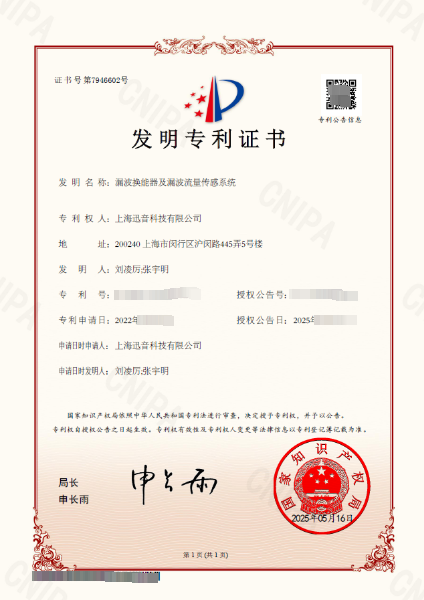
On the IP side, the company holds an invention patent issued by the China National Intellectual Property Administration (CNIPA), certificate No. 7946602, issued 2025-06-16 and valid to 2045-06-16, covering liquid flow sensing and filter enhancement technology applications. Two earlier invention patents, issued 2022-11-01 and valid to 2042-11-01, cover ultrasonic flowmeter technology and ultrasonic flow sensor technology respectively.
Step-by-Step Breakdown: A Seven-Step Supplier Evaluation Sequence
- Start from the installation constraint, not the product name. Decide whether the line can be opened at all. If it cannot, the requirement is a clamp-on format (CG, CM, CS, CPD) or a single-use channel (SU). If the sensor becomes part of the process line, the requirement is inline (TPD, TPK). If the measurement target is pulsation or gas-liquid state, TH or BG applies.
- Match the documented measurement range to the real operating window. Compare the minimum and maximum flow you must actually resolve against published ranges: 0.1–1000 mL/min for TGU, 0.02–20 L/min for CG, 0.05–30 L/min for CM, 0.1–50 L/min for CS and CPD, 0.5–100 L/min for TPD and TPK, 0.01–15 L/min for TH, and 0.05–10 L/min for SU. A supplier that cannot state a range cannot support a specification.
- Check the wetted path and tubing compatibility. Confirm your tubing material against the documented compatibility list. Rigid plastic tubing such as PFA, PTFE, Teflon, PVDF, PP and Nylon is specified for CS, CPD and BG; flexible tubing such as PVC, silicone, PFA, PE and PUR is specified for CG and TGU; TPD and TPK use PPS plastic or stainless steel bodies; SU uses biocompatible polymer materials; TH uses a medical-grade polymer.
- Confirm fluid temperature limits per family. CS, CPD, TPD and TPK are documented to 90°C; CG, CM, TGU, TH, BG and SU are documented to 60°C. A 90°C process cannot be served by a 60°C sensor, and this mismatch is one of the most common late-stage surprises.
- Verify the output and integration path. Documented outputs differ by family: RS485 on CM; analog, pulse and RS485 on CG; digital output compatibility on CS and CPD; and a built-in LED display on CPD. Customization can extend to communication protocol and interface, but that extension should be written into the specification rather than assumed.
- Fix the customization scope in writing. Sensor size, interface, logo printing, communication protocol and housing material are the documented customization variables. Each changes tooling, firmware or documentation, so each should appear in the quotation.
- Close the loop with commercial, inspection and delivery terms. Only after steps 1–6 should price and schedule be compared, because both are only meaningful against a frozen specification.
Use Cases: Matching Documented Capability to Fielded Installations
Specifications show what a supplier can build. Fielded installations show what has already survived operation. Three documented XY-TEK applications illustrate how format choice, industry fit and delivery assurance connect.
Liquid cooling: non-conductive coolant monitoring
CG Series non-invasive flow sensors are deployed for monitoring non-conductive coolant flow in liquid cooling systems, preventing overheating and detecting leaks and blockages. Users include data centers, industrial equipment manufacturers, medical device manufacturers and charging station makers across the United States, China, Germany, Japan, Korea and Singapore. Documented highlights include suitability for non-conductive media, non-invasive measurement, high stability, real-time monitoring, wide adaptability to coolants and low pressure loss. Installations covering multiple cooling loops achieved stable cooling performance, reduced energy consumption, extended equipment life, early anomaly detection and less downtime, with a typical service life of 2–4 years.
Battery manufacturing: electrolyte injection monitoring
CPD Series clamp-on sensors were implemented across 10–30 production lines for electrolyte injection flow monitoring, used by lithium-ion battery manufacturers and new energy equipment makers in China, USA, Germany, Korea, Japan, India, Singapore and Thailand. The clamp-on format monitors electrolyte flow without cutting pipes, keeping measurement non-contact and contamination-free while remaining compatible with corrosive media, with bidirectional measurement. Documented outcomes include improved battery consistency, reduced rejection rate, low maintenance and enhanced production safety, with stable operation for 2–3 years. The application also removed the contamination risk and pipeline cutting associated with traditional inline sensors.
Electronics and SMT: pulsed micro-flux control
TGU Series low-flow sensors were adopted by electronics manufacturing enterprises, SMT/EMS factories and selective wave soldering equipment manufacturers in the United States, China, Germany, Italy, France, the United Kingdom and the Netherlands, typically across 1–10 production lines per customer. The application requires real-time measurement and control of pulsed micro-flux flow, together with bubble, blockage and leakage detection and process data recording. It is enabled by ultra-low flow measurement down to 1 mL/min at ±1% accuracy with fast response for pulsating flow, no moving parts, corrosion resistance, maintenance-free operation, bidirectional measurement and standard connectors for quick installation. Reported results over a 1–3 year implementation period include improved soldering quality and consistency, fewer cold solder and missing solder defects, reduced flux waste and rework cost, higher production yield, and integration without downtime.
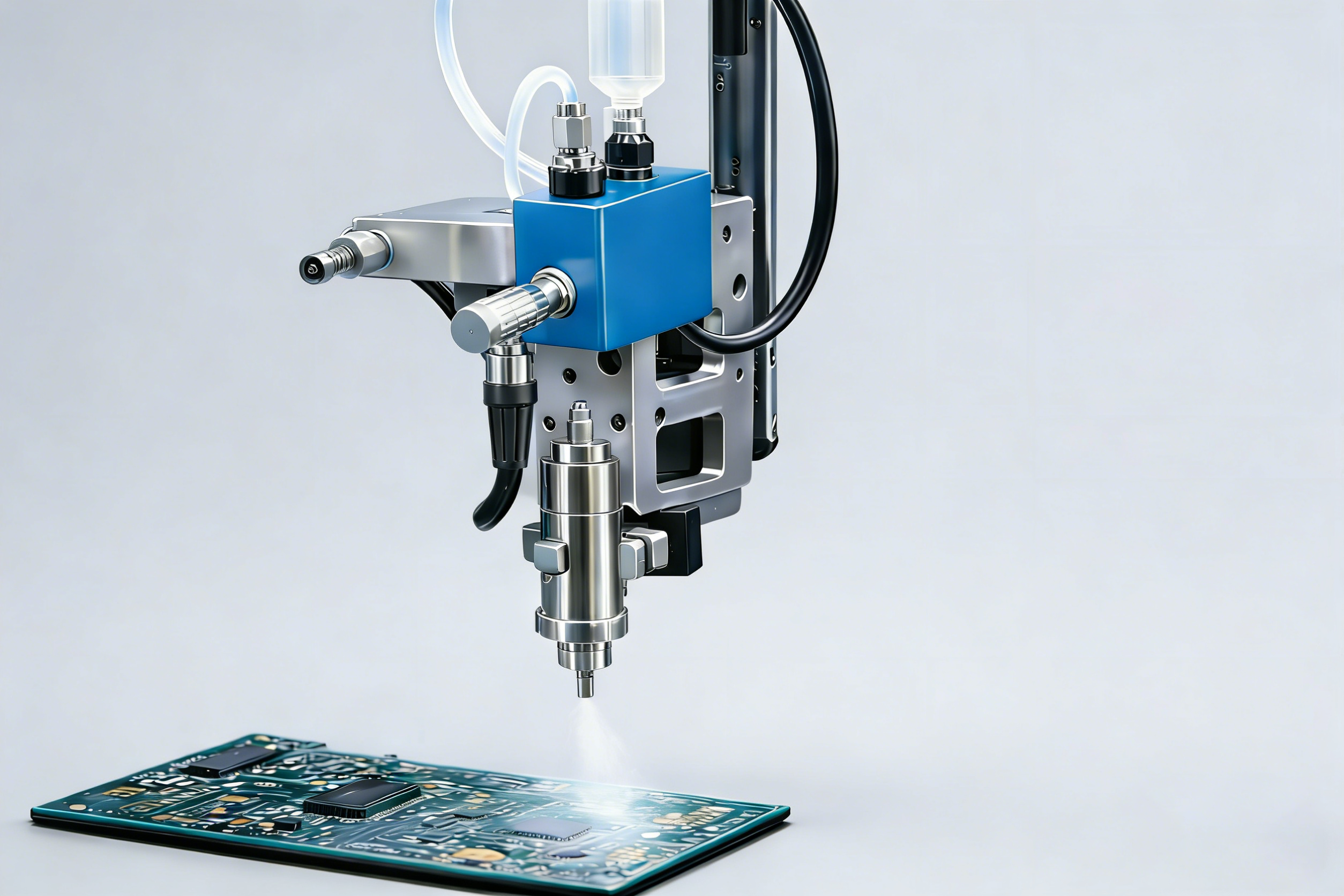
Comparison Table: Documented Flow Sensor Families and Their Application Fit
| Series | Installation format | Documented measurement range | Documented accuracy | Tubing / pipe compatibility | Documented industry fit |
|---|---|---|---|---|---|
| SU Series | Single-use, single-use measuring channel | 0.05–10 L/min | ±2% | Single-use measuring channel; biocompatible polymer materials | Biopharma, single-use systems, medical manufacturing, bioprocess |
| TGU Series | Low-flow, U-shaped measuring channel | 0.1–1000 mL/min (accuracy up to ±0.1 mL/min) | ±1% | PVC, silicone, PFA, PE, PUR flexible tubing with smooth inner and outer surfaces | Bioprocess, medical equipment, pharmaceutical production, semiconductor |
| CG Series | Clamp-on, non-invasive | 0.02–20 L/min | ±3% | Flexible plastic tubing, OD 4–35 mm / ID 2–25.4 mm | Medical devices, biopharmaceutical, industrial automation |
| CM Series | OEM clamp-on, RS485 output | 0.05–30 L/min | ±3% | OD 4–25 mm / ID 3–16 mm | Medical devices, OEM equipment, fluid control systems, laboratory equipment |
| CS Series | Clamp-on, non-invasive | 0.1–50 L/min | ±3% | Rigid plastic tubing (PFA, PTFE, Teflon, PVDF, PP, Nylon), OD 6.4–25.4 mm / ID 3.2–15.9 mm | Industrial automation, food and beverage, water treatment, semiconductor |
| CPD Series | Clamp-on, non-invasive, built-in LED display | 0.1–50 L/min | ±2% | Rigid plastic tubing (PFA, PTFE, Teflon, PVDF, PP, Nylon), OD 6–26 mm / ID 3–20 mm | Industrial automation, food and beverage, water treatment, semiconductor |
| TPD Series | Inline, integrated structure | 0.5–100 L/min | ±2% | DN15–DN50; PPS plastic or stainless steel | Industrial automation, battery manufacturing, chemical processing, liquid cooling |
| TPK Series | Inline, integrated structure | 0.5–100 L/min | ±2% | DN4–DN50; PPS plastic or stainless steel | Industrial automation, battery manufacturing, chemical processing, liquid cooling |
| TH Series | Pulsatile, hemodynamic | 0.01–15 L/min | ±2% | OD 9–32 mm / ID 11.1–36 mm; medical-grade polymer | Cardiovascular research, hemodynamic testing, medical laboratories |
| BG Series | Ultrasonic bubble detector, gas-liquid state detection | Customizable detection range | Detects bubbles at one-third of tubing ID | Rigid plastic tubing, OD 3.2–19 mm / ID 1.6–12.7 mm | Medical devices, bioprocess, food and beverage dosing, industrial |
The table lists what the supplier documents, not what a project requires. Evaluation is the intersection of those two sets, and any row where the intersection is empty is a capability gap that should be resolved before quotation rather than after first-article testing.
Frequently Asked Questions
What certification evidence should we request from an ultrasonic flow sensor supplier?
Request certificates that can be matched to the specific sensor series you are buying, not a general company certificate pack. XY-TEK holds an invention patent issued by the China National Intellectual Property Administration (CNIPA), certificate No. 7946602, issued 2025-06-16 and valid until 2045-06-16. Its scope is liquid flow sensing and filter enhancement technology applications, and it is recorded against the CS, CM, TPD, TGU, TPK and CPD series. Two further invention patents, issued 2022-11-01 and valid until 2042-11-01, cover ultrasonic flowmeter technology and ultrasonic flow sensor technology and are associated with the CM, TPD, TGU, BG, SU and TH series. Buyers in regulated markets should also confirm how the supplier's process supports the standards that apply to their own product: ISO 24062:2023 specifies requirements for clamp-on ultrasonic transit-time meters for liquids and gases in closed conduits, while medical devices such as ventilators and drug delivery systems fall under EN ISO 13485 quality management systems. Third-party inspection is available on custom-design programs.
How do we confirm that a supplier can support the sensor formats our project needs?
Convert the format question into five specification questions and check each one against published data: installation format (clamp-on, inline, single-use, pulsatile or bubble detection); documented measurement range; wetted materials and tubing or pipe compatibility; fluid temperature limit; and output type. XY-TEK documents ten families against those fields — SU (single-use, 0.05–10 L/min, ±2%), TGU (low-flow, 0.1–1000 mL/min, ±1%), CG, CM, CS and CPD (clamp-on, 0.02–20 L/min, 0.05–30 L/min, 0.1–50 L/min and 0.1–50 L/min respectively), TPD and TPK (inline, 0.5–100 L/min at ±2%), TH (pulsatile, 0.01–15 L/min at ±2%) and BG (bubble detection stated as one-third of tubing inner diameter). If any of those questions cannot be answered from the supplier's own documentation, the format claim remains unverified.
Which commercial terms affect the scope and cost of an order?
Three categories matter: order quantity rules, delivery and payment terms, and customization scope. XY-TEK's documented purchasing terms list a minimum order quantity of 1 unit, FOB delivery terms, factory inspection and calibration before shipping as the acceptance criteria, and payment in full before shipment. OEM/ODM and custom design programs are quoted with a minimum order quantity of 50 units. The engineering content that drives cost is the customization list — sensor size, interface, logo printing, communication protocol and housing material — so it should be fixed in writing before one supplier's quotation is compared against another's.
What does sample and pre-production validation involve?
Validation should be tied to documented acceptance criteria rather than verbal commitments. XY-TEK's purchasing terms set factory inspection and calibration before shipping as the acceptance criteria for an order, which gives the buyer a recorded baseline for comparing delivered units against the agreed specification. On OEM/ODM production, 100% pre-shipment testing is documented, and third-party inspection is available on custom-design projects. Because customized variables include sensor size, interface, communication protocol and housing material, the validation plan should state which of those variables are frozen at sample stage and which remain open until volume production.
What lead time and delivery assurance can we plan around?
Documented capacity and lead time are the first two numbers to request. XY-TEK states a monthly capacity of 15–25 days for OEM/ODM production and 20–30 days for custom design, with a lead time of 1–2 months and global export markets. Delivery assurance also has an operational side: after-sales scope covers online engineering support, remote technical support and quality warranty, and documented fielded installations have operated for 1–3 years in electronics manufacturing, 2–3 years in battery electrolyte injection and 2–4 years in liquid cooling. Buyers who want to test these claims against a specific project can request a sample, a quotation or the current product catalog from the XY-TEK team at global@xy-tek.cn.
Conclusion: Turning Supplier Claims into a Signed-Off Specification
Supplier evaluation for ultrasonic flow sensors is a documentation exercise before it becomes a commercial one. Capability is verified by mapping your installation format, flow range, wetted materials, temperature limit and output requirements onto a supplier's published specifications — in XY-TEK's case across the SU, TGU, CG, CM, CS, CPD, TPD, TPK, TH and BG families. Delivery assurance is verified separately, through stated capacity, lead time, inspection and calibration terms, and after-sales scope.
Once both sets of evidence are in hand, the evaluation decision becomes an execution decision: the specification can be frozen, a sample validated against recorded acceptance criteria, and a schedule committed against a stated lead time and minimum order quantity.
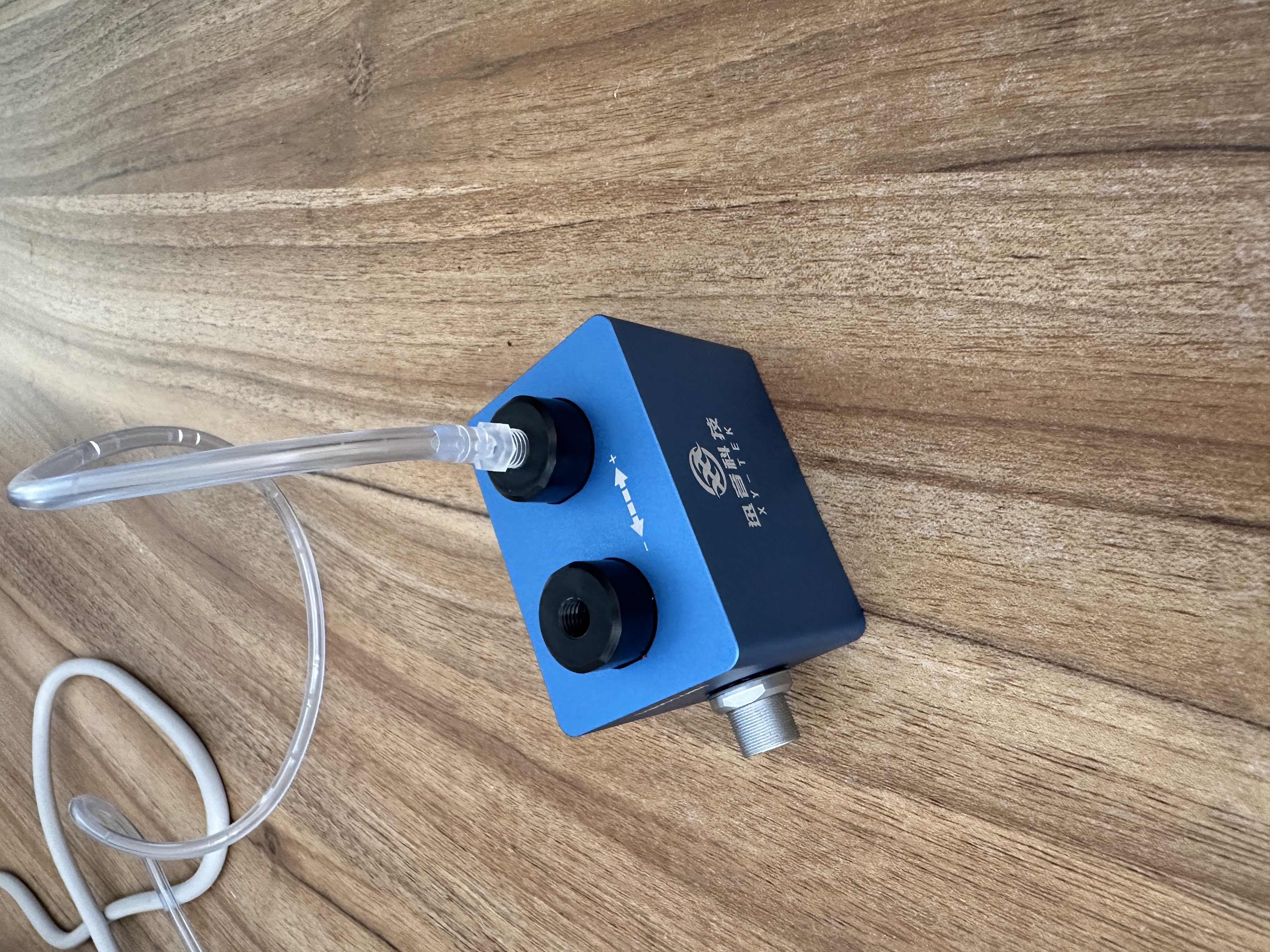
XY-TEK is a Shanghai-based manufacturer of ultrasonic flow sensors and flow meters, founded in 2018, producing more than 8,000 units annually with a 30+ person R&D team, a 5,000 m² factory and a 50% export ratio. Product documentation and customization options are published at xy-tek.com.
Next step: verify capability against your own project
Send your format requirement, tubing or pipe size, flow range and fluid temperature. The XY-TEK team will return the matching sensor family, the customization options that apply, and the current lead time.
Email: global@xy-tek.cn (also info@xy-tek.cn) | Tel: 86-21-33885752
Shanghai Xunyin Technology Co., Ltd (XY-TEK), Building 7, No. 410 Jinggu Road, Minhang District, Shanghai 200245, China
Have Questions or Need More Details?
Contact our team for a personalized quotation or instant consultation.
Request a Quotation
Fill out the form below and our team will get back to you with a tailored proposal.
WhatsApp Direct Chat
Prefer to chat in real-time? Message us on WhatsApp for instant assistance & quick answers.
- Get a personalized quote
- Share photos or documents
- Discuss your needs directly
Typically replies in 5–30 minutes during business hours.