Flow Sensor Compliance Guide: Certifications, Standards & Regional Requirements
Flow Sensor Compliance Guide: Certifications, Standards & Regional Requirements
Compliance is the first gate an ultrasonic flow sensor has to pass in a regulated industry — before accuracy, before price, and usually before the first sample leaves the factory.
This guide maps the certification and regulatory landscape that buyers navigate when sourcing ultrasonic flow sensors for global markets. It covers the measurement standard behind the clamp-on format (ISO 24062:2023), the quality management expectations that apply when a flow sensor becomes part of a medical device (EN ISO 13485), the material-contact and cleanliness expectations that differ between bioprocess, food & beverage and semiconductor environments, and the way sensor construction and installation format decide which of those requirements are reachable at all.
Short answer for buyers: compliance is configuration-specific, not brand-specific. Four items decide whether a flow sensor can be qualified in a regulated application: the measurement standard it was engineered against, the quality management system behind its manufacture, the material documentation for the exact configuration quoted, and the supplier's ability to keep calibration and documentation consistent across repeat orders.
Problem Definition: Why Compliance Problems Surface After the Pilot Stage
Compliance failures in flow sensing rarely start in the measurement electronics. They cluster in three places — the fluid path, the destination market and the time dimension — and all three are easy to overlook during a pilot build, when a single unit works exactly as expected.
The fluid path is the first point of failure
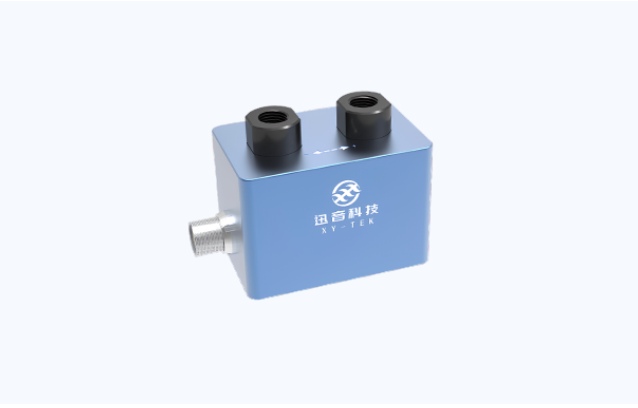
Every regulated application starts with one question: does the medium touch any part of the sensor, and if so, what is that part made of? An invasive in-line meter adds a wetted component to the process — an extra material that must be documented, cleaned and, in medical and bioprocess work, justified inside a validation file. A non-invasive design removes that question entirely. XY-TEK's CG series clamp-on ultrasonic flow sensors are clamped directly onto flexible plastic tubing, measure liquid flow rate accurately and detect air bubbles, and they do this without contaminating the liquid. The gap between those two starting points shows up as documentation and validation effort, not as a difference in accuracy.
The same sensor faces different rules in different markets
There is no single global flow sensor certificate. A configuration assessed for a European medical device programme, a food production line and a semiconductor fab is reviewed against different material, hygiene and cleanliness expectations, even when the measurement principle is identical. Buyers who source one configuration for several markets should map requirements market by market and identify early which documents transfer and which have to be regenerated for the destination region.
A certificate is a snapshot; supply is a sequence
The third failure mode is continuity. A component that was documented correctly at qualification can lose that trail through a material substitution, a new production batch, a change of tubing, or a calibration interval that quietly lapses. Sensor drift in particular is a compliance risk that appears after the certificate, which is why XY-TEK treats it as a control loop rather than a single specification: an automatic compensation algorithm combined with factory calibration, on-site calibration, remote support calibration and routine performance validation.
Industry Background: A Growing Sensor Market With Region-Specific Rules
The commercial context explains why the compliance layer keeps getting thicker. Grand View Research estimated the global flow meter market at USD 10.64 billion in 2024 and projected it to reach USD 15.17 billion by 2030. The ultrasonic segment inside that category is expanding faster: Mordor Intelligence valued the global ultrasonic flow meter market at USD 1.52 billion in 2025 and projected USD 2.28 billion by 2031.
Demand is also concentrated. Fortune Business Insights placed Asia Pacific at 38.6% of the ultrasonic flow meter market in 2025, driven by industrial expansion — a regional weighting that matters to compliance planning, because the largest demand region is not the region that sets material and hygiene expectations for every destination market.
Non-invasive formats are a large part of that growth. Global Information, Inc. valued the clamp-on ultrasonic flowmeter market at USD 1.25 billion in 2024 with a 7.4% CAGR through 2032. Part of the reason is practical and part of it is regulatory: a sensor clamped to the outside of a line can usually be installed, replaced or re-calibrated without cutting pipework or opening the process, which keeps hygiene and shutdown constraints under control in regulated plants.
Regulated end industries also pull compliance expectations down into the sensor category itself. Market Research Future estimated flow control in the semiconductor industry at USD 5.83 billion in 2024, focused on high-purity fluid management — an environment where particle and residue control, not measurement accuracy alone, decides component acceptance. Dataintelo lists Emerson Electric, Siemens AG, Endress+Hauser and Honeywell among the major competitors in ultrasonic flow meters, alongside application-focused manufacturers such as XY-TEK, whose 5,000㎡ facility, annual output above 8,000 units and roughly 50% export ratio place it in the specialist segment of the same market.
Detailed Solution: How XY-TEK's Sensor Construction and Manufacturing Address Compliance Requirements
Shanghai Xunyin Technology Co., Ltd (XY-TEK) is a Shanghai-based manufacturer of ultrasonic flow sensors and flow meters, founded in 2018, operating a 5,000㎡ facility with a 30+ engineer R&D team, an annual output above 8,000 units and exports to global markets at roughly a 50% export ratio. Its flow sensors are used in medical devices, bioprocessing, scientific research, industrial automation and food & beverage production.
Compliance is addressed at three levels in that portfolio: how the sensor touches — or avoids — the fluid, how the product is assembled and inspected, and how measurement stability is maintained after installation.
Non-invasive measurement keeps the sensor out of the fluid path
XY-TEK's CG series clamp-on ultrasonic flow sensors are compact clamp-on units that measure flow rate and output results without external circuitry. They are clamped directly onto flexible plastic tubing, where they measure the liquid flow rate accurately without contaminating the liquid and can detect air bubbles within the same measurement. For compliance work this is the most consequential design decision available: the sensor adds no wetted material to the process, so material documentation, cleaning validation and material-contact discussions stay focused on the tubing or fluid path the customer already controls. Non-contact ultrasonic detection is also the control method XY-TEK uses against liquid contamination as a risk category.
In-line configurations for fixed fluid paths
Where a process design requires a permanently installed fluid path instead of an externally clamped sensor, XY-TEK's in-line ultrasonic flow sensors can be integrated into existing flow systems with excellent accuracy, resolution and reliability. The compliance implication is the mirror image of the clamp-on case: an in-line body introduces a wetted component, so the materials of that specific configuration must be documented against the destination market's material-contact expectations before design freeze, rather than assumed from the sensor brand.
Assembly and inspection evidence
Compliance claims are only as strong as the evidence behind them, which is why assembly and inspection controls belong to the product definition rather than to a service layer. XY-TEK manages contamination risk through non-contact ultrasonic detection and assembles under clean-room conditions with strict quality inspection, and the manufacturer conducts 100% pre-shipment testing and offers third-party inspection for quality control. For programmes where an incoming inspection record has to be attached to a device history file, pre-shipment test documentation and calibration records are the practical evidence pack.
Drift control and calibration continuity
Sensor drift is the compliance risk that appears after the certificate rather than before it. XY-TEK's approach combines an automatic compensation algorithm with factory calibration at build stage and, after installation, on-site calibration or remote support calibration. Routine performance validation, in-time after-sales support and remote technical support complete the loop, so accuracy can be re-confirmed without returning the unit to the factory or breaking the fluid path.
Material selection must be confirmed per configuration
Flow sensor families are built for different environments: biocompatible polymer components for single-use and low-flow fluid paths, stainless steel and engineering plastics for industrial lines, and compact housings that combine ABS with stainless steel components for clamp-on units. Because material composition changes between series — and between configurations within a series — the compliance question is not what materials a brand usually uses, but what exactly is inside the model being quoted and which document supports it. Buyers should treat the datasheet of the quoted configuration as the authoritative material statement and confirm it in writing before design freeze.
Customization when a standard configuration does not fit
Where an off-the-shelf configuration cannot satisfy a regulated requirement, XY-TEK provides OEM ultrasonic flow sensors / flow meters and customized services, supported by an R&D team of more than 30 engineers. Customization is often the fastest compliance route for OEM equipment builders, because housing format, cable routing, output signal and material choices can be aligned with the host machine's own validation file instead of being adapted to it afterwards.

Step-by-Step Breakdown: An Eight-Step Compliance Review Workflow
- Classify the regulated environment first. Medical device, bioprocess and pharmaceutical, food & beverage, semiconductor and general industrial environments each trigger a different family of requirements. Decide which one applies before any sensor is shortlisted, because the environment — not the price list — determines which formats are viable.
- Map requirements per destination market, not per manufacturer. A configuration qualified for one market is not automatically acceptable in another. List every market the product ships to, and for each one record the material-contact, hygiene and documentation expectations that apply to the fluid path.
- Decide whether the sensor may enter the fluid path. If the answer must be no, a clamp-on format is the only option; if an in-line body is acceptable, plan material documentation and cleaning compatibility for it from the start.
- Confirm materials and documentation for the exact configuration. Request the material statement, datasheet and any available compliance documentation for the quoted model — not for the product family in general.
- Verify the quality system and inspection evidence. Ask how assembly and inspection are controlled. XY-TEK assembles under clean-room conditions with strict quality inspection, performs 100% pre-shipment testing and offers third-party inspection for buyers who need independent confirmation.
- Validate the calibration and drift strategy. Confirm the automatic compensation algorithm, factory calibration at build, and the available post-installation options — on-site calibration or remote support calibration — plus routine performance validation for the life of the equipment.
- Test the sample under real process conditions. Sample validation should reproduce production reality: the same tubing or pipe material and diameter, the same medium and temperature range, the actual flow range, and a check of bubble detection if the application depends on it.
- Lock commercial terms, acceptance criteria and continuity. Acceptance criteria can be defined as factory inspection with calibration before shipping; delivery terms are FOB and payment terms are fully paid before shipment. Plan quantities and timing around a minimum order quantity of 50 units, a standard delivery time of 1–2 months and a typical production lead time of 1–2 months, and confirm after-sales support — online engineering support, remote technical support and a quality warranty — before qualification closes.
Use Cases: Where Compliance Requirements Change the Sensor Choice
- Medical devices and drug delivery. Medical sensors, including flow sensors used in ventilators and drug delivery, fall under EN ISO 13485 quality management expectations. Where the sensor measures from outside the fluid path, validation work stays concentrated on the tubing set and the delivery system rather than on an additional wetted sensor component, and bubble detection on the same clamp-on sensor supports the safety function these systems typically require. XY-TEK flow sensors are used in medical devices and scientific research, and 100% pre-shipment testing provides an inspection record per unit.
- Bioprocess and pharmaceutical production. Single-use tubing assemblies dominate bioprocess fluid handling, and an externally clamped sensor preserves the closed fluid path instead of interrupting it. Non-contact ultrasonic detection, combined with clean-room assembly and strict quality inspection, addresses contamination control directly, while remote support calibration lets accuracy be re-confirmed without breaking the assembly.
- Food & beverage production. Food-contact material expectations apply to every surface the product touches, so each extra wetted component adds documentation and cleaning work. A clamp-on sensor mounted on the outside of the line leaves the wetted set unchanged; where an in-line sensor is preferred on a permanent line, the materials of that configuration should be confirmed against the requirements of the destination market before design freeze.
- Semiconductor and high-purity fluid handling. With flow control in the semiconductor industry estimated at USD 5.83 billion in 2024 and focused on high-purity fluid management, cleanliness and residue control dominate acceptance decisions. A non-invasive measurement format keeps the fluid path closed and introduces no new wetted material to qualify.
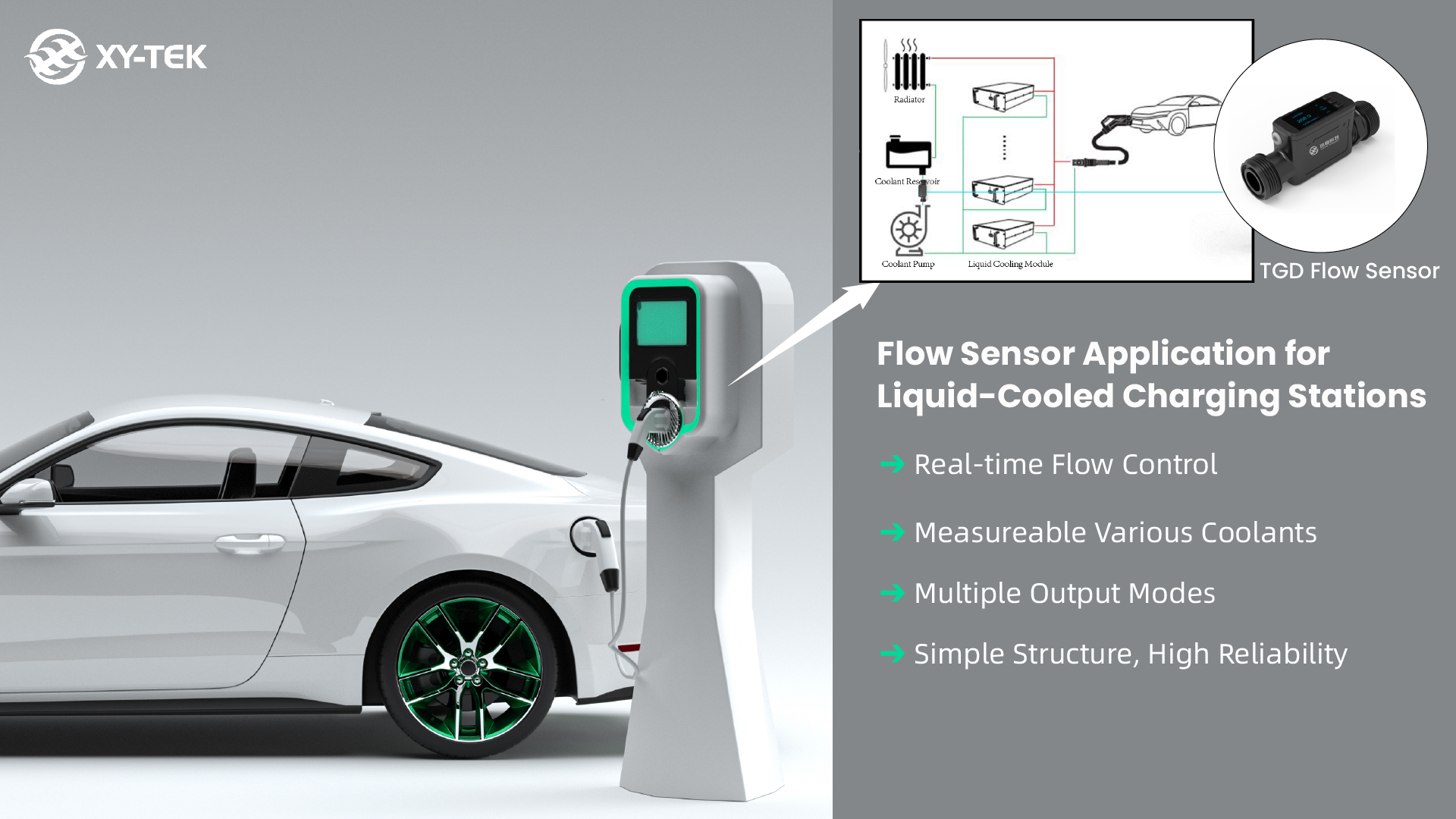
- Industrial automation, dispensing, filling and liquid cooling. Here the constraint is usually installation and maintenance rather than regulated material lists. Clamp-on formats retrofit onto existing flexible tubing without cutting pipework or shutting the line down. XY-TEK's published technology comparison states that its ultrasonic meters operate with zero pressure drop and no moving parts, while turbine meters add +5%~15% pressure drop and require blade replacement every 6–12 months, and Coriolis meters add +15%~30% pressure drop at 3–5× the unit cost. Zero pressure drop means no additional pump power and no shutdown to replace a sensor.
Comparison Table: Compliance Checkpoints by Application Environment
| Application environment | Primary compliance focus | Sensor design implication | Evidence to request |
|---|---|---|---|
| Medical devices & drug delivery | Quality management system (EN ISO 13485), material documentation, safety functions | Non-invasive measurement preferred; integrated bubble detection | Calibration records; 100% pre-shipment test documentation; bubble detection behaviour on the actual tubing |
| Bioprocess & pharmaceutical | Contamination control; closed single-use fluid paths | External clamp-on mounted on flexible plastic tubing | Material statement for the quoted configuration; clean-room assembly and strict inspection evidence |
| Food & beverage | Food-contact material expectations in the destination market | External clamp-on, or a cleanable in-line configuration | Material documentation per market; calibration before shipping |
| Semiconductor & high-purity fluids | Cleanliness; particle and residue control | Minimum wetted surface; fluid path kept closed | Assembly and inspection records; third-party inspection option |
| Industrial automation, liquid cooling, filling & dispensing | Installation constraints; retrofit; maintenance intervals | Clamp-on retrofit without pipe cutting; zero pressure drop | Drift-control method (compensation algorithm plus factory, on-site or remote calibration); long-term calibration plan |
| Multi-market OEM programme | Documentation transferability across regions | Format that avoids adding new wetted materials | Regional requirement mapping; acceptance criteria agreed in writing |
ISO 24062:2023 specifies requirements for clamp-on ultrasonic transit-time meters for liquids and gases in closed conduits, and EN ISO 13485 applies to medical sensors, including flow sensors for ventilators and drug delivery. The remaining requirements are set by the destination market and by the end product's own regulatory pathway. This table is a planning aid for procurement and engineering teams, not a substitute for the applicable regulation.
FAQ: Flow Sensor Compliance, Capability, Cost, Sampling and Lead Time
Which standards and certifications apply to an ultrasonic flow sensor?
Two reference points apply most often. ISO 24062:2023 specifies requirements for clamp-on ultrasonic transit-time meters for liquids and gases in closed conduits, which covers the clamp-on measurement format. EN ISO 13485 is the quality management system standard that applies when flow sensors are used in medical devices such as ventilators and drug delivery systems. Beyond these, the binding requirements are usually regional: material-contact and food-contact expectations, hygiene and cleaning rules, and cleanliness expectations in high-purity environments are set by the destination market and by the end product's regulatory pathway. Because compliance is configuration-specific, buyers should request documentation for the exact model and configuration quoted rather than for a product family in general.
Can a non-invasive clamp-on flow sensor meet hygiene and contamination requirements?
For many regulated processes it can, because the sensor never contacts the medium. XY-TEK's CG series clamp-on ultrasonic flow sensors are clamped directly onto flexible plastic tubing, where they measure liquid flow rate accurately and detect air bubbles without contaminating the liquid, so the measurement adds no wetted surface to the process. The manufacturer manages contamination risk through non-contact ultrasonic detection and assembles under clean-room conditions with strict quality inspection. Where the process design requires a fixed fluid path, in-line ultrasonic flow sensors can be integrated into existing flow systems with excellent accuracy, resolution and reliability — and because an in-line body does introduce a wetted component, that configuration's materials must be documented for the destination market.
What drives the cost of a compliant ultrasonic flow sensor compared with other technologies?
Hardware cost and compliance cost are separate budgets. On the hardware side, XY-TEK's published comparison states that Coriolis meters offer ±0.2% accuracy but cost 3–5× more than XY-TEK ultrasonic meters and add +15%~30% pressure drop; turbine meters offer ±0.2% accuracy but drift by at least 5% per year through blade wear and need blade replacement every 6–12 months plus filtration, adding about 15% to total cost; electromagnetic meters work only with conductive fluids and fail with fluorinated liquids and mineral oils. XY-TEK ultrasonic meters are specified at ±1%~±2% accuracy with zero pressure drop and no moving parts. The compliance-driven share of cost comes mainly from documentation, calibration and validation work, not from the unit price alone.
How should a sample be validated before a volume order?
Sample validation should reproduce production conditions: the same tubing or pipe material and diameter, the same medium and temperature range, and the real flow range the process runs at. XY-TEK conducts 100% pre-shipment testing and offers third-party inspection for quality control, and acceptance criteria can be defined as factory inspection with calibration before shipping. For regulated projects, the sample stage is also the point to confirm in writing the material documentation for the quoted configuration, the calibration records, and the drift-control approach — an automatic compensation algorithm supported by factory, on-site or remote support calibration.
What lead time and long-term support should buyers plan for?
The minimum order quantity is 50 units, with a standard delivery time of 1–2 months and a typical production lead time of 1–2 months. Because compliance depends on continuity as much as on the initial certificate, the long-term items matter as much as the delivery date: after-sales services include online engineering support, remote technical support and a quality warranty, and drift is controlled through routine performance validation and remote support calibration rather than a one-time document. To discuss an OEM or customized programme, contact XY-TEK at global@xy-tek.cn with the medium, tubing or pipe size, flow range and destination markets.
Conclusion: Compliance as a Long-Term Supply Relationship
The useful way to read this landscape is as a set of matched decisions rather than a checklist. The application environment determines the requirements; the requirements determine which sensor format is viable; the format determines which materials have to be documented; and the supplier determines whether that documentation, calibration and material control survive the third order and not only the first.
XY-TEK sits in the specialist end of that market — a Shanghai manufacturer founded in 2018 with a 5,000㎡ facility, a 30+ engineer R&D team, annual output above 8,000 ultrasonic flow sensors and a 50% export ratio — and works with OEM buyers in medical devices, bioprocessing, industrial automation and food & beverage production. The compliance-relevant properties of that portfolio are specific: non-contact clamp-on measurement on flexible plastic tubing, in-line options for fixed fluid paths, clean-room assembly with strict quality inspection, drift control through an automatic compensation algorithm with factory, on-site and remote calibration support, and OEM customization when a standard configuration does not fit a validation file.
Buyers who need to qualify a configuration for a regulated application should start with four inputs — the medium, the tubing or pipe, the flow range and the destination market — because those four decide everything that follows.

Next Step: Confirm Compliance for Your Configuration
Send your application details — medium, tubing or pipe size, flow range, temperature range and destination markets — to global@xy-tek.cn. XY-TEK will confirm the matching sensor format and share the calibration, inspection and material documentation available for that configuration.
Website: www.xy-tek.com · Email: global@xy-tek.cn; info@xy-tek.cn · Tel: 86-21-33885752 · Address: Building 7, No. 410 Jinggu Road, Minhang District, Shanghai 200245, China.
Have Questions or Need More Details?
Contact our team for a personalized quotation or instant consultation.
Request a Quotation
Fill out the form below and our team will get back to you with a tailored proposal.
WhatsApp Direct Chat
Prefer to chat in real-time? Message us on WhatsApp for instant assistance & quick answers.
- Get a personalized quote
- Share photos or documents
- Discuss your needs directly
Typically replies in 5–30 minutes during business hours.