
Low-Flow Drift in Bioprocess Lines: Ultrasonic Guide
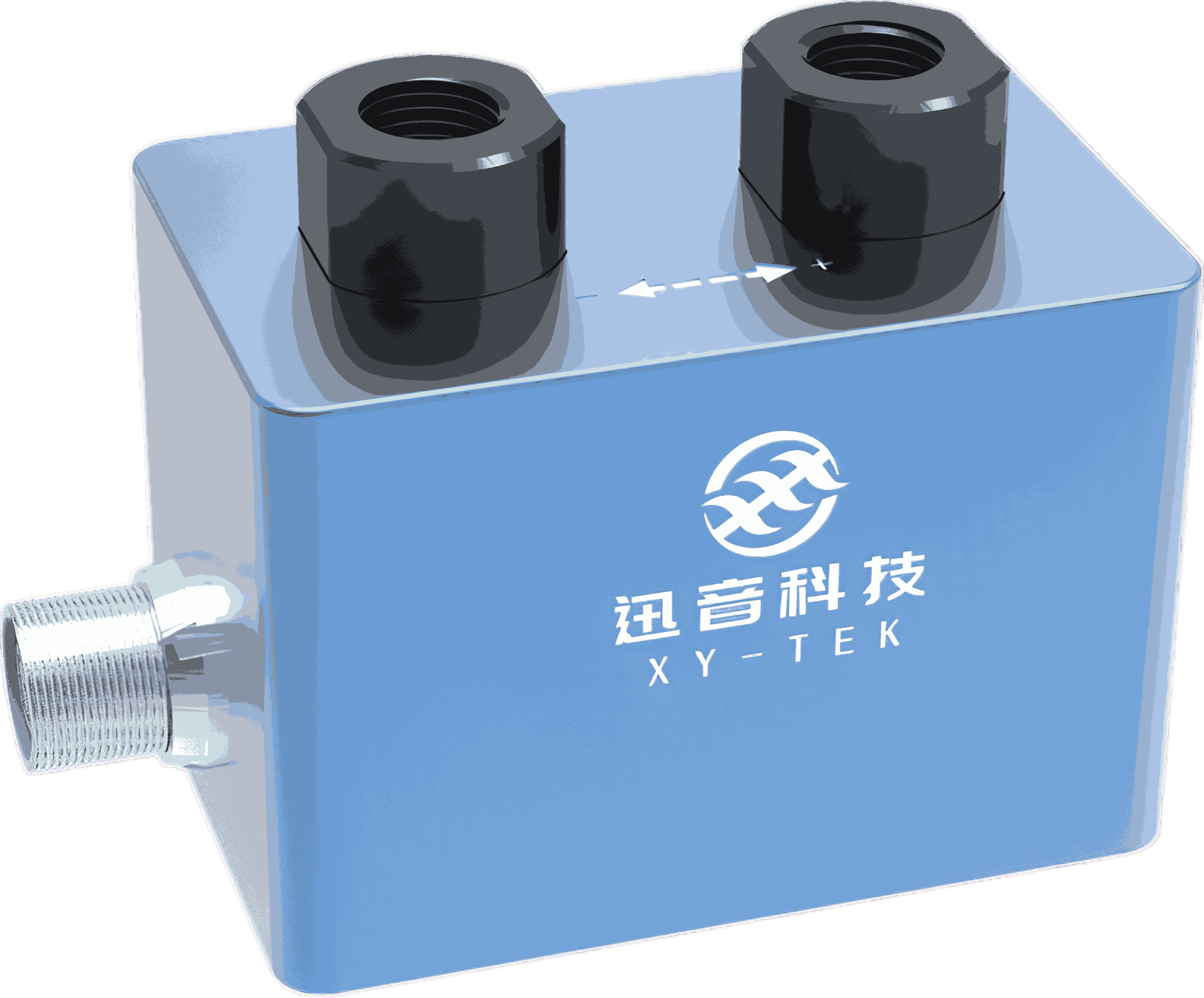
Low-flow measurement drift in a bioprocess line is usually a symptom of a hydraulic or installation problem, not proof that the flow sensor has failed. The practical answer is to separate pulsation, bubbles, tubing variation, and mounting effects from sensor error, then select a non-contact ultrasonic format that matches the actual flow range and tubing set. XY-TEK's low-flow portfolio, including the TGU Series low-flow sensor, TH Series pulsatile sensor, SU Series single-use sensor, and BG Series bubble detector, provides different starting points for that diagnosis.
What Low-Flow Measurement Drift Looks Like
Measurement drift is a change in the indicated flow rate under the same commanded pump speed, fluid, and tubing set. In low-flow bioprocess lines, the symptom may appear as a slow baseline shift, a noisy signal, a reading that lags pump changes, or a growing difference between the setpoint and the measured value. The absolute error may be small in millilitres per minute, but it can be a large share of a low flow rate.
Drift is not the same as a single outlier. A bubble passing through the measuring channel can create a short spike or dropout. A peristaltic pump can produce a repeating ripple. A tubing change can shift the baseline for an entire run. A failed zero or a loose clamp-on mounting can create a step change. The diagnostic task is to identify which pattern is present before changing hardware.

Why Bioprocess Lines Are Sensitive to Small Flow Errors
Bioprocess lines often use small-diameter tubing, low flow rates, and pumps that introduce pulsation. Those conditions make flow measurement more sensitive to physical effects in the line. A small change in tubing internal diameter, wall stiffness, or fit can alter the flow profile. A bubble can occupy a meaningful fraction of a small channel. A pulsating pump can move fluid in bursts that a slow sensor averages or misses.
Market context supports the broader use of ultrasonic and clamp-on formats, but it does not replace line-level diagnosis. HTNXT Research's 2026 industry snapshot puts the global flow meter market at USD 10.64 billion in 2024 and the ultrasonic flow meter segment at USD 1.52 billion in 2025. Straits Research's 2026 analysis estimates that clamp-on designs account for 57% of the global ultrasonic flow meter market. Those figures describe market structure, not the accuracy of any specific low-flow installation.
XY-TEK's stated focus is ultrasonic flow sensors for fluid management and control, especially small tubing and low flow rate measurement. That focus is relevant because low-flow drift is often a system-level problem: the sensor, tubing, pump, and fluid condition have to be evaluated together.
Diagnosing the Cause Before Changing the Sensor
Start with a controlled comparison: keep the same fluid and tubing, command several fixed flow rates, and log the sensor output alongside pump speed, tubing lot, and any visible bubbles. The pattern usually points to the dominant cause.
Pulsation from the pump
Peristaltic and other positive-displacement pumps can create a repeating flow ripple. If the indicated flow oscillates at the pump frequency, the problem may be response time or signal processing rather than a permanent sensor shift. A sensor with high-speed pulsation capture may resolve the waveform, but the selection still depends on the flow range and the intended application. The TH Series Pulsatile Flow Sensor, for example, covers 0.01–15 L/min with ±2% accuracy and high-speed pulsation capture; its documented applications are cardiovascular research, hemodynamic testing, and medical laboratories, so a bioprocess user should confirm that the line conditions and tubing fit that intended use.
Bubbles and gas-liquid slugs
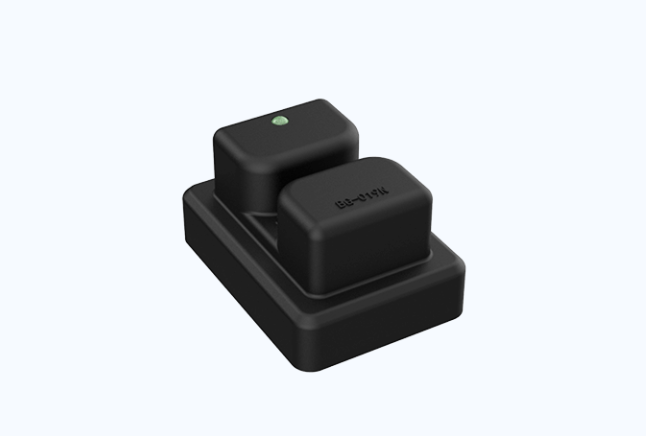
Bubbles change the speed of sound and the effective cross-section of the liquid path. In a low-flow line, even a small bubble can create a short error that looks like drift if it repeats. Use a bubble detector to separate gas-liquid state from flow measurement. The BG Series Bubble Detector Sensor performs non-contact gas-liquid state detection, with customizable detection range and response time, and is intended for medical devices, bioprocess, food and beverage dosing, and industrial applications. Its compatible pipe range is 3.2–19 mm outer diameter and 1.6–12.7 mm inner diameter.
Tubing inconsistency
Tubing is part of the measurement. A different lot, a stretched section, a kink, or a change in wall thickness can shift the acoustic path and the flow profile. Record the tubing material, inner diameter, outer diameter, and lot. For low-flow work, XY-TEK's TGU Series is compatible with PVC, silicone, and PE tubing and uses a U-shaped measuring channel; its scope is 0.1–1000 mL/min, with ±1% accuracy and measurement accuracy up to ±0.1 mL/min. Those specifications only apply when the installed tubing and fluid match the intended configuration.
Installation and signal path
For clamp-on sensors, mounting position and coupling matter. A sensor that has moved, lost acoustic coupling, or been fitted to a different tube size can produce a stable but wrong reading. Check that the sensor is matched to the tube, that the mounting is secure, and that the output is scaled correctly. Zero and reference checks should be repeated after any tubing or mounting change.
How Non-Contact Ultrasonic Sensing Addresses Drift
Non-contact ultrasonic sensing removes several mechanical failure modes from the liquid path. XY-TEK states that its products use high-precision transit-time technology. In a transit-time ultrasonic sensor, the instrument compares the travel time of an ultrasonic signal with and against the flow direction; the difference is used to derive flow velocity. Because the measurement is acoustic, it does not require a moving part in the flow stream, and clamp-on formats do not require pipe cutting.
That design does not make a sensor immune to installation or fluid effects. It does mean the diagnostic checklist can focus on the acoustic path, tubing, bubbles, and pulsation rather than on impeller wear or rotor fouling. For a bioprocess line, the practical benefits are no pressure loss from an in-line moving part, no contamination path through a wetted rotor, and the ability to retrofit a clamp-on sensor onto existing tubing where the sensor and tube are compatible.
XY-TEK's portfolio covers several formats rather than one universal answer. The TGU Series is the low-flow option for small tubing; the SU Series is the single-use option; the BG Series monitors gas-liquid state; and clamp-on models such as the CG and CPD Series support non-invasive measurement on compatible tubing. The correct choice depends on flow range, tubing, sterility requirement, and whether the line is reusable or single-use.
Matching the Sensor to the Low-Flow Problem
Selection should begin with the measured flow range and the tubing, not with the sensor name. The following verified options address different parts of the drift problem.
TGU Series for low liquid flow in small tubing
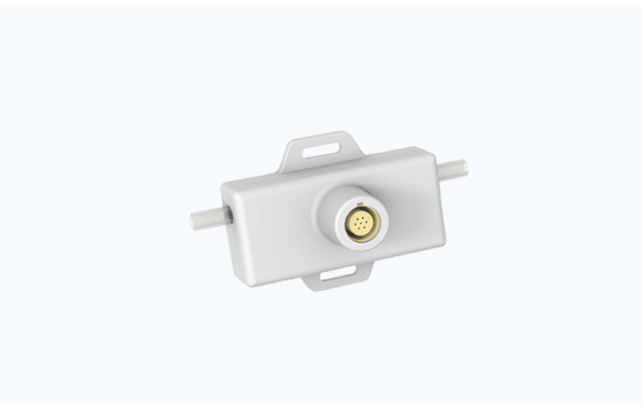
The TGU Series Low-flow Ultrasonic Flow Sensor is an ultra-low flow sensor with a U-shaped measuring channel. It covers a 0–1000 mL/min range and a 0.1–1000 mL/min scope, with ±1% accuracy and measurement accuracy up to ±0.1 mL/min. It is compatible with PVC, silicone, and PE tubing, uses biocompatible plastic and an ultrasonic sensor module, and is intended for bioprocess, medical equipment, pharmaceutical production, and semiconductor applications. For a low-flow bioprocess line, it is the most direct starting point when the flow sits in the millilitre-per-minute range and the tubing is compatible.
TH Series for pulsatile flow capture
The TH Series Pulsatile Flow Sensor covers 0.01–15 L/min with ±2% accuracy and high-speed pulsation capture. It is made of medical-grade polymer and a precision ultrasonic chip and is intended for cardiovascular research, hemodynamic testing, and medical laboratories. It is useful evidence that pulsation capture is a distinct measurement requirement rather than a marketing add-on, but it should not be treated as a drop-in bioprocess sensor without checking the application scope and tubing.
SU Series for single-use systems
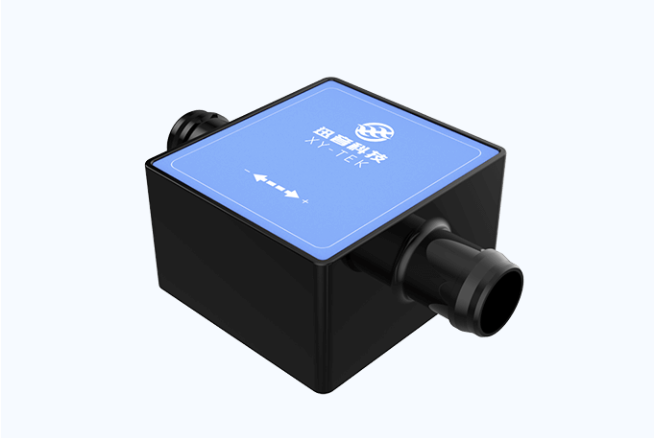
The SU Series Single-use Ultrasonic Flow Sensor covers 0.05–10 L/min with ±2% accuracy. It has a single-use measuring channel made of biocompatible polymer materials, high measurement repeatability, and support for sterile applications and hygienic fluid monitoring. It is intended for biopharma, single-use systems, medical manufacturing, and bioprocess. In a single-use line, the disposable channel can remove reusable-sensor cleaning and cross-contamination concerns, but the user still has to control tubing lot, connection fit, and bubble ingress.
BG Series for gas-liquid state monitoring
The BG Series Bubble Detector Sensor is not a flow meter. It detects gas-liquid state and provides non-contact bubble monitoring with customizable detection range and response time. It is made of engineering plastic and an ultrasonic module and is intended for medical devices, bioprocess, food and beverage dosing, and industrial use. Its role in a drift investigation is to answer a separate question: is the line liquid-full, or is a bubble or gas slug passing the measurement point? That answer prevents a flow sensor from being blamed for a hydraulic condition.
Clamp-on and inline options for broader flow ranges
When the line is outside the TGU or SU range, clamp-on and inline models may fit. The CG Series clamp-on ultrasonic flow sensor covers 0.02–20 L/min with ±1% accuracy, air bubble detection, bi-directional flow detection, and analog, pulse, and RS485 outputs. The CPD Series clamp-on sensor covers 0.1–50 L/min with ±2% accuracy, clamp-on installation without pipe cutting, air bubble monitoring, and digital output compatibility. The CM Series OEM clamp-on flow meter covers 0.05–30 L/min with RS485 output for OEM integration. The CS Series covers 0.1–50 L/min with ±3% accuracy and air bubble monitoring. Inline TPK and TPD Series cover 0.5–100 L/min with ±2% accuracy and no moving parts for industrial, battery, chemical, and liquid-cooling applications. These are not interchangeable with the low-flow models; they are alternatives when the flow range and tubing point to a different format.
Comparison of Relevant Sensor Options
| Model and format | Verified flow range | Accuracy | Drift-related fit | Verified notes |
|---|---|---|---|---|
| TGU Series low-flow sensor | 0.1–1000 mL/min scope; 0–1000 mL/min range | ±1%; measurement accuracy up to ±0.1 mL/min | Low liquid flow in small tubing | U-shaped measuring channel; PVC, silicone, and PE tubing compatibility |
| TH Series pulsatile sensor | 0.01–15 L/min | ±2% | Pulsation capture | High-speed pulsation capture; cardiovascular research, hemodynamic testing, medical laboratories |
| SU Series single-use sensor | 0.05–10 L/min | ±2% | Single-use lines and hygienic monitoring | Biocompatible polymer measuring channel; sterile and hygienic fluid monitoring support |
| BG Series bubble detector | 1/3 bubble size of tubing ID | Not stated as flow accuracy | Gas-liquid state and bubble monitoring | Non-contact detection; 3.2–19 mm OD and 1.6–12.7 mm ID pipe compatibility |
| CG Series clamp-on sensor | 0.02–20 L/min | ±1% | Non-invasive retrofit on compatible tubing | Air bubble detection; bi-directional; analog, pulse, and RS485 outputs |
| CPD Series clamp-on sensor | 0.1–50 L/min | ±2% | Clamp-on monitoring without pipe cutting | Air bubble monitoring; digital output compatibility |
| CM Series OEM clamp-on meter | 0.05–30 L/min | Not stated in the cited summary | OEM integration | RS485 output; non-contact liquid measurement; compact design |
Step-by-Step: From Drift Symptom to Verified Reading
- Define the reference condition. Record the commanded flow, pump type, tubing material and dimensions, fluid, temperature, and whether the line is single-use or reusable. A drift complaint without these variables is difficult to reproduce.
- Log the pattern, not one point. Capture the reading at several fixed setpoints and over at least one full pump cycle. A repeating wave points to pulsation; short spikes or dropouts point to bubbles; a step change points to tubing, mounting, or zero.
- Inspect the fluid path. Check for kinks, partially closed valves, loose connections, and tubing that has stretched or been replaced. Confirm that the fluid is within the listed measurable fluids for the selected model and that solid particles are not excessive.
- Check the acoustic path. For clamp-on models, confirm tube compatibility, mounting position, and coupling. For low-flow models, confirm that the tubing sits correctly in the measuring channel and that the tube lot has not changed without a new baseline check.
- Separate bubbles from flow. Use a BG Series bubble detector where gas-liquid state is uncertain, or use a flow model with air bubble monitoring such as the CG or CPD Series. If bubbles are present, solve the degassing or liquid-full condition before adjusting the flow sensor.
- Match the sensor to the flow range. Use the TGU Series for 0.1–1000 mL/min scope work in compatible small tubing, the SU Series for single-use 0.05–10 L/min lines, and the TH Series only where its pulsatile application scope fits. For broader ranges, compare the CG, CPD, CM, CS, TPK, and TPD options by range, installation, and output.
- Verify at the low end. Low-flow accuracy should be checked near the lowest intended operating point, not only at a convenient mid-range value. Repeat the check after any tubing or mounting change.
- Document and monitor. Keep the reference values, tubing lot, and maintenance actions with the process record. A repeatable drift history is more useful than a one-time zero adjustment.
Use Cases in Bioprocess and Medical Manufacturing
The same drift logic applies differently across low-flow applications. The sensor choice should follow the fluid path and the required documentation, not a generic preference for one format.
Perfusion, filtration, and chromatography lines
These bioprocess operations use small-diameter tubing and low flow rates where bubbles and pulsation can distort the reading. A non-contact sensor avoids adding a moving part to the flow path, and a bubble detector can identify gas-liquid upsets separately. The TGU Series is relevant when the flow is in the millilitre-per-minute range and the tubing is compatible; the SU Series is relevant when the line is single-use.
Single-use bioprocess assemblies
Single-use systems require a measuring channel that matches the disposable flow path. The SU Series provides a single-use measuring channel made of biocompatible polymer materials, with a 0.05–10 L/min range, ±2% accuracy, high measurement repeatability, and support for sterile applications. The disposable format addresses cross-contamination concerns, but tubing fit and bubble ingress remain part of the validation.
Medical device and laboratory flow loops
Medical and laboratory lines can involve blood, dialysis fluid, perfusion liquids, or pharmaceutical solutions. XY-TEK's clamp-on and low-flow formats are intended for non-contact measurement where contamination and pressure loss matter. The application still requires confirmation of fluid compatibility, tubing, temperature, and the required output.
Pulsatile test rigs
Pulsatile flow testing is a distinct use case. The TH Series covers 0.01–15 L/min with ±2% accuracy and high-speed pulsation capture, and its documented applications are cardiovascular research, hemodynamic testing, and medical laboratories. A bioprocess team with pump pulsation should not assume that a pulsatile test sensor is automatically the right process sensor; the intended use and tubing conditions must match.
Limitations and Selection Boundaries
A sensor specification does not guarantee a process result. The cited XY-TEK models list measurable fluids such as water, blood, drinks, oil, and paint, with the qualification that the fluid should contain no or few solid particles. Temperature limits, tubing material, tubing dimensions, and output type also vary by model. The TGU Series, for example, is a low-flow sensor for compatible PVC, silicone, and PE tubing, while the CPD Series is a clamp-on sensor for a different flow range and installation approach.
Non-contact ultrasonic measurement removes moving-part wear and contamination risk from the flow path, but it does not remove the need for correct installation, zeroing, and reference checks. Clamp-on installation avoids pipe cutting, yet it depends on tube matching and acoustic coupling. A single successful reading is not a validation of drift performance; the line should be checked across its intended low-flow range and after tubing changes.
FAQ
What causes low-flow measurement drift in bioprocess lines?
The common causes are pulsation from the pump, bubbles or gas slugs, tubing inconsistencies, and installation or signal errors. Drift can also come from a sensor that is outside its intended flow range. The pattern matters: repeating oscillation points to pulsation, short spikes or dropouts point to bubbles, and a step change after tubing replacement points to the tubing or mounting.
How do bubbles affect ultrasonic flow sensor readings?
Bubbles change the acoustic path and reduce the liquid cross-section. In a low-flow line, a small bubble can create a short error that looks like drift when it repeats. A bubble detector such as the BG Series can monitor gas-liquid state separately from flow, while flow sensors such as the CG and CPD Series also list air bubble monitoring.
Which XY-TEK sensor is suitable for very low flow in bioprocess tubing?
The TGU Series is the low-flow ultrasonic sensor in XY-TEK's portfolio, with a 0–1000 mL/min range, a 0.1–1000 mL/min scope, ±1% accuracy, measurement accuracy up to ±0.1 mL/min, and a U-shaped measuring channel compatible with PVC, silicone, and PE tubing. It is intended for bioprocess, medical equipment, pharmaceutical production, and semiconductor applications. The final choice depends on the actual tubing and fluid.
How do I choose between the TGU, TH, and SU Series?
Start with the flow range and the fluid path. TGU is the low-flow reusable-format sensor for small tubing; SU is the single-use sensor with a biocompatible polymer measuring channel and a 0.05–10 L/min range; TH is the pulsatile sensor for 0.01–15 L/min with high-speed pulsation capture and documented cardiovascular and hemodynamic applications. A bioprocess line with pulsation should first confirm whether the pulsation is within the selected sensor's intended use.
Can a clamp-on sensor measure low flow without cutting tubing?
Clamp-on ultrasonic sensors can measure flow without pipe cutting when the tubing and sensor are compatible. XY-TEK's CPD Series is a clamp-on sensor with a 0.1–50 L/min range and ±2% accuracy; the CG Series covers 0.02–20 L/min with ±1% accuracy. Clamp-on installation avoids cutting the line, but it still requires correct tube matching and mounting. For millilitre-per-minute flow, the TGU Series is the more specific low-flow option.
What should I check before replacing a drifting sensor?
Check the tubing lot and dimensions, pump pulsation, bubbles, mounting, zero and scaling, and whether the flow is inside the sensor's stated range. Compare the reading at more than one fixed setpoint and after a tubing change. If the pattern remains after these checks, discuss the application with XY-TEK at global@xy-tek.cn or info@xy-tek.cn and include flow range, tubing material and ID, fluid, temperature, and single-use or reusable status to request a sample or quotation.
Conclusion
Low-flow drift is best solved as a line-level problem. Confirm the flow range and tubing first, then separate pulsation, bubbles, tubing variation, and installation effects. Ultrasonic sensing helps because it removes moving parts from the flow path and supports non-contact or clamp-on measurement where the tubing and sensor are compatible. The TGU Series addresses millilitre-per-minute flow in small tubing, the SU Series addresses single-use bioprocess lines, the BG Series separates gas-liquid state from flow, and the TH Series covers high-speed pulsation capture within its documented applications.
For a bioprocess line, the practical next step is a controlled comparison at the lowest intended setpoint, followed by a tubing and mounting review. XY-TEK's R&D team includes more than 30 engineers, and the company serves medical devices, bioprocessing, scientific research, industrial automation, and food and beverage production. Teams evaluating a low-flow sensor can contact XY-TEK to discuss the application and request a sample or quotation.
Send the flow range, tubing material and ID, fluid, temperature, and single-use or reusable status to global@xy-tek.cn or info@xy-tek.cn. Phone: 86-21-33885752.
Have Questions or Need More Details?
Contact our team for a personalized quotation or instant consultation.
Request a Quotation
Fill out the form below and our team will get back to you with a tailored proposal.
WhatsApp Direct Chat
Prefer to chat in real-time? Message us on WhatsApp for instant assistance & quick answers.
- Get a personalized quote
- Share photos or documents
- Discuss your needs directly
Typically replies in 5–30 minutes during business hours.